Alaska Pollock: An Overlooked Food for Neuromuscular Health and Longevity
By Tony Ruggia | I AM LONGEVITY | Nutrition | November 29, 2026
Introduction
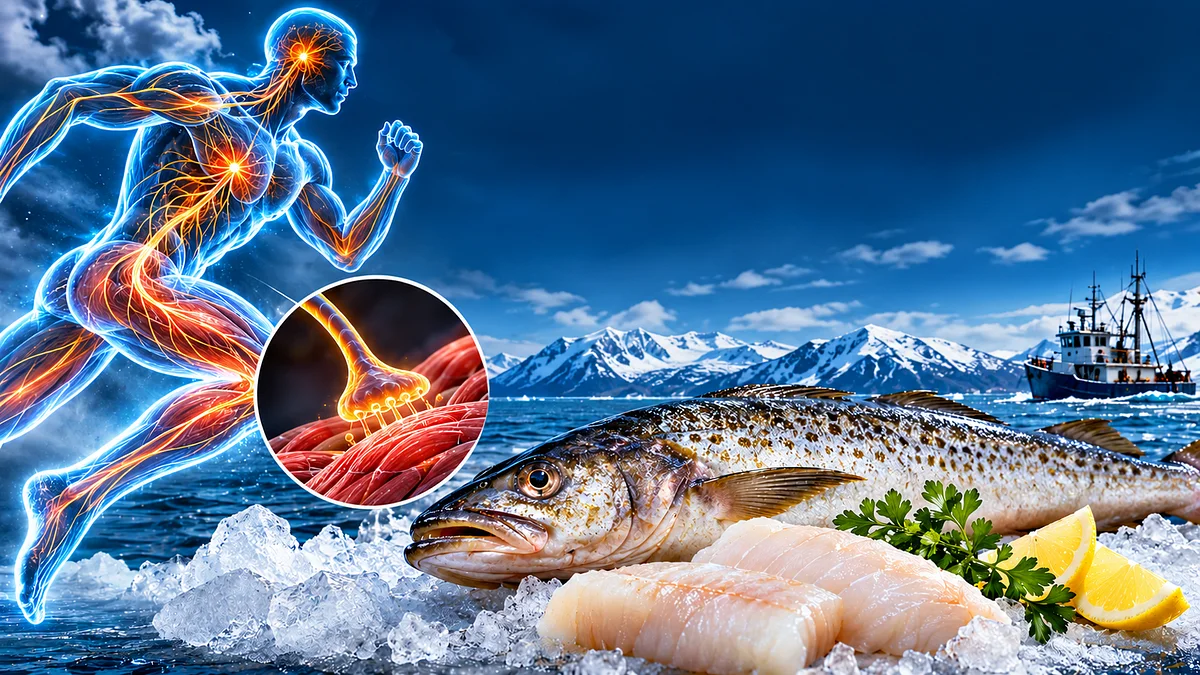
When people talk about the health benefits of eating fish, the conversation usually revolves around omega-3 fatty acids, heart health and high-quality protein. However, research on Alaska pollock (Gadus chalcogrammus) suggests that certain fish proteins may have biological effects that go far beyond their nutritional value.
What makes Alaska pollock particularly interesting to me is its potential influence on the neuromuscular system. Human studies have found that consuming Alaska pollock protein alongside resistance training can influence the way motor units fire. Animal studies have also identified changes in fast-twitch muscle fibers, muscle growth and several biological pathways involved in muscle function.
In May 2026, a new study provided further evidence of how Alaska pollock protein may influence fast-twitch muscle fibers and their metabolism. This research adds another piece to a fascinating scientific puzzle that researchers have been investigating for years.
Could the type of protein we consume influence not only the size of our muscles but also the way our nervous system controls them?
To understand why this matters for healthy aging, we need to look at both the human research and the biological mechanisms scientists have identified in laboratory experiments.
Table of Contents
- Why Alaska Pollock Is Different
- How Can a Food Influence the Nervous System?
- The Human Study in Older Adults
- The Human Study in Young Adults: More Strength Without Bigger Muscles
- Understanding the Onion Skin Phenomenon
- The New 2026 Study: Alaska Pollock and Fast-Twitch Muscle Fibers
- A Surprising Effect on Muscle Fat Metabolism
- Bioactive Peptides: Why Protein May Be More Than Building Material
- My Perspective: Why Alaska Pollock Deserves Attention in Longevity Research
- Conclusion
- Scientific References
- Related Articles
Why Alaska Pollock Is Different
Alaska pollock is a white fish found in the North Pacific Ocean. It is widely used in fish sandwiches, fish cakes and imitation crab. Despite being relatively inexpensive and widely available, its proteins have attracted considerable scientific interest.
In 2023, a systematic review by Negara et al. examined 43 studies investigating the biological activities of Alaska pollock protein and its peptides.
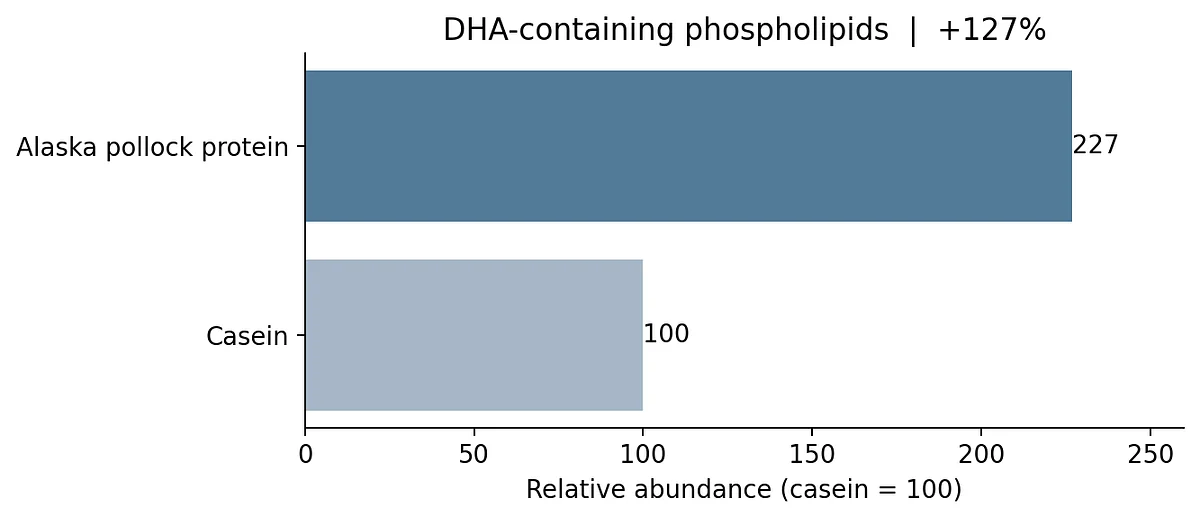
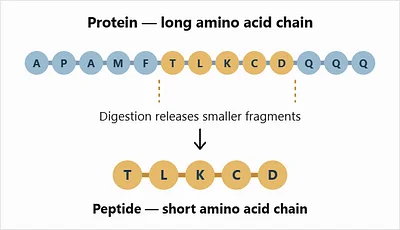
The researchers identified several potential health benefits, including effects on muscle growth, fat metabolism, blood glucose regulation and cholesterol. They also identified smaller fragments of pollock protein that demonstrated biological activities beyond simply supplying amino acids.
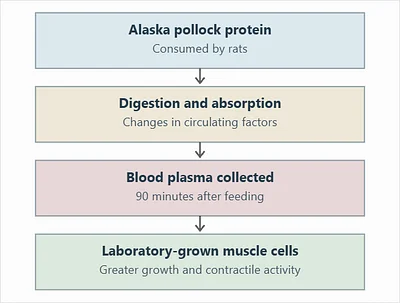
However, as illustrated in Figure 1, it is important to distinguish between the different types of scientific research investigating these potential benefits.
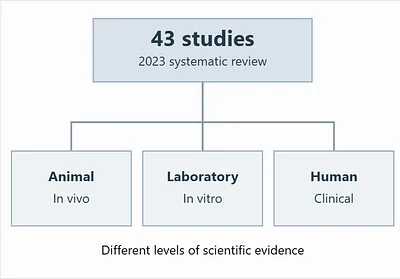
Figure 1. Types of experimental research investigating the biological effects of Alaska pollock protein and its derivatives. Source: 2023 systematic review.
This distinction is important. Although animal and laboratory experiments help us understand how a food might influence human biology, they cannot establish that the same benefits occur in humans.
Fortunately, researchers have also investigated Alaska pollock protein in both younger and older adults, specifically examining how it influences the motor units responsible for controlling muscle contractions.
How Can a Food Influence the Nervous System?
Every voluntary movement you make depends on motor units. A motor unit consists of a motor neuron and all the muscle fibers it controls. When that motor neuron sends an electrical signal, the muscle fibers belonging to that motor unit contract.
However, producing movement is not simply a matter of switching motor units on and off. The nervous system must also control how frequently they send electrical signals. This is known as motor unit firing rate.
Imagine two people with approximately the same amount of muscle. One can generate considerably more force than the other because of differences in how effectively their nervous systems activate their muscles. Muscle size alone does not determine physical performance.
This is precisely what makes the Alaska pollock research so interesting. Scientists have investigated whether consuming a particular dietary protein can modify these neural adaptations during resistance training.
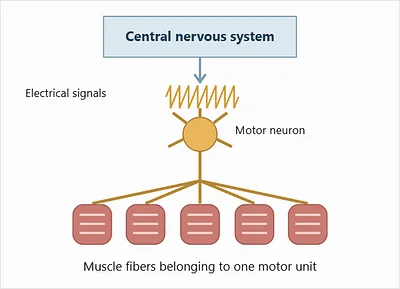
Figure 2. A motor neuron transmits electrical signals to the muscle fibers it controls. The frequency of these signals helps regulate muscle force. Simplified illustration.
As illustrated in Figure 2, the muscle is only one part of the movement-producing system. The electrical signals controlling that muscle are equally important.
The Human Study in Older Adults
In December 2018, Watanabe et al. published a study investigating the effects of Alaska pollock protein and resistance training on motor unit firing patterns and physical function in older adults.
The study involved 50 healthy older men and women. The researchers divided the participants into four groups, as shown in Table 1.
| Group | Participants | Intervention |
|---|---|---|
| APP-CN | 13 | Pollock protein without training |
| PLA-CN | 12 | Placebo without training |
| APP-RT | 12 | Pollock protein with training |
| PLA-RT | 13 | Placebo with training |
Table 1. Experimental groups in the six-week human intervention. Source: Watanabe et al. (2018).
Participants receiving Alaska pollock protein consumed just five grams of the protein daily in a soup added to their normal diet.
The resistance training groups performed leg presses twice a week, completing three sets of ten repetitions per session. Following the initial familiarization period, the training intensity was set at 70% of the maximum weight each participant could lift for one repetition.
The researchers measured physical function and recorded electrical activity from the vastus lateralis, one of the large muscles on the front and outer side of the thigh. This allowed them to examine the firing behavior of individual motor units.
Improvements in physical function
One of the tests involved measuring how many times participants could stand up from a chair and sit back down within 30 seconds.
Although this may sound like a simple exercise, the ability to repeatedly stand up from a seated position is an important component of everyday physical independence.
The participants combining Alaska pollock protein with resistance training improved from an average of 18.2 repetitions at the beginning of the study to 21.2 repetitions after six weeks, an improvement of approximately 16.5%.
As shown in Figure 3, improvements were already observed after three weeks.
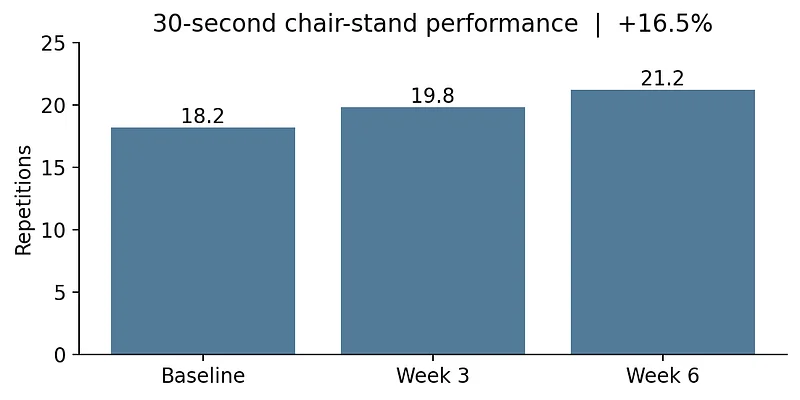
Figure 3. Mean chair-stand performance during six weeks of pollock protein consumption combined with resistance training. Source: Watanabe et al. (2018).
All four groups improved their chair-stand performance by the end of the study. However, the pollock and resistance training group demonstrated significant improvements at both three and six weeks.
Changes in motor unit firing rates
The researchers also discovered that the pattern of motor unit adaptation differed between participants receiving pollock protein with resistance training and those receiving a placebo with resistance training.
The changes were mainly observed in motor units recruited at relatively low levels of force.
At a force level corresponding to 50% of maximum voluntary contraction, the firing rates of these motor units initially increased in both training groups. However, their behavior differed as the study progressed, as illustrated in Figure 4.
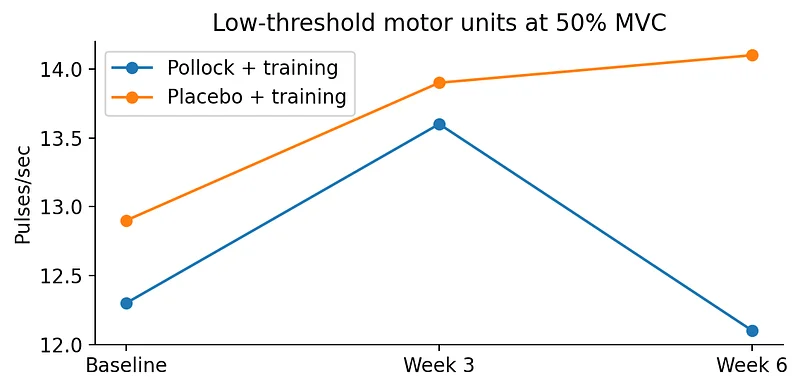
Figure 4. Different patterns of motor unit firing adaptation during resistance training with pollock protein or placebo. Source: Watanabe et al. (2018).
Interestingly, neither of the groups that consumed the test soups without resistance training demonstrated significant changes in motor unit firing rates.
This suggests that Alaska pollock protein may influence the adaptations produced by exercise rather than simply altering motor unit firing behavior on its own.
It is an important distinction, particularly when discussing nutrition and neuromuscular aging.
The Human Study in Young Adults: More Strength Without Bigger Muscles
In March 2021, Watanabe et al. published another study, this time investigating 18 young men and women with an average age of approximately 21 years.
The participants were divided into two groups of nine. One group consumed five grams of Alaska pollock protein daily, while the other consumed five grams of casein, a protein derived from milk.
Both groups performed resistance training twice a week for eight weeks.
Unlike the previous study, the participants performed isometric knee extensions. An isometric contraction occurs when a muscle produces force without the joint moving.
The results were fascinating. Both groups became considerably stronger, yet neither group experienced a significant increase in measured muscle mass.
As shown in Table 2, maximum voluntary contraction increased by 38.3% in the Alaska pollock group and 34.7% in the casein group.
| Measurement | Alaska pollock | Casein |
|---|---|---|
| Participants | 9 | 9 |
| Average age | 21.6 years | 21.7 years |
| Daily supplemental protein | 5 g | 5 g |
| Training duration | 8 weeks | 8 weeks |
| Initial knee-extension force | 516.9 N | 559.8 N |
| Final knee-extension force | 696.7 N | 756.2 N |
| Average individual strength improvement | 38.3% | 34.7% |
| Significant muscle mass increase | No | No |
Table 2. Comparison of strength and muscle mass adaptations in young adults. Source: Watanabe et al. (2021).
The difference in strength improvement between the two groups was not statistically significant. Therefore, we cannot conclude that pollock protein produced greater strength gains than casein.
However, the researchers discovered something more interesting when they examined the motor units.
Significant changes in firing rates among motor units recruited at higher levels of force were observed in the Alaska pollock group but not in the casein group.
The researchers also observed more pronounced changes in the relationship between the firing rates of motor units with different recruitment thresholds in the pollock group.
These findings suggest that the source of dietary protein may influence how the neuromuscular system adapts to resistance training, even when the overall improvements in strength are similar.
Understanding the Onion Skin Phenomenon
When we gradually increase the amount of force produced by a muscle, motor units are generally recruited according to their size and recruitment threshold.
Smaller, lower-threshold motor units are recruited first. As the demand for force increases, additional motor units with higher recruitment thresholds are brought into action.
During certain sustained or gradually increasing muscle contractions, researchers have observed that motor units recruited earlier tend to fire at higher frequencies than motor units recruited later.
When these firing rates are displayed on a graph, they resemble the overlapping layers of an onion. This is known as the onion skin phenomenon.
Figure 5 provides a simplified illustration of this firing-rate relationship.
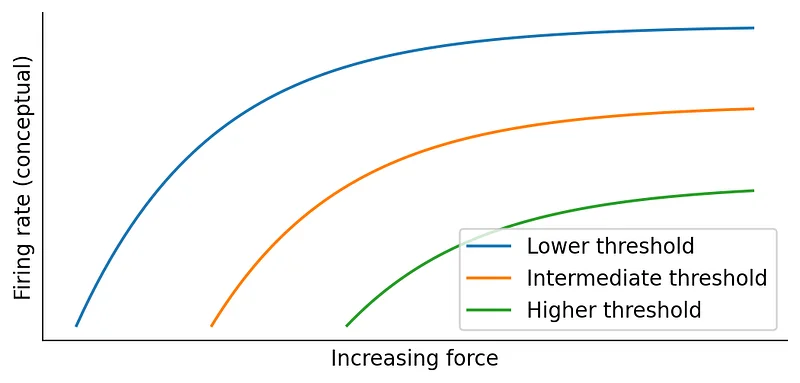
Figure 5. Conceptual illustration of the onion skin firing-rate pattern. Not actual experimental data or direct identification of muscle fiber types.
Research discussed by Watanabe et al. indicates that these relationships can differ between younger and older adults and can change in response to resistance training.
In the 2021 study, the researchers observed that consuming Alaska pollock protein alongside training modified these relationships. In particular, some higher-threshold motor units demonstrated reduced firing rates during higher-force portions of the test.
Why would a reduction in firing rate be interesting?
If a muscle can produce the same amount of force while requiring fewer electrical signals from certain motor units, it may indicate that the neuromuscular system has become more efficient under those particular testing conditions.
The researchers proposed this as one possible interpretation of their findings.
However, the study did not demonstrate that lost motor neurons had been regenerated, nor did it directly measure the restoration of Type IIx motor units. It demonstrated changes in the firing behavior of detectable motor units.
That is an important finding in its own right.