Is 1.6 g/kg of Protein Really Enough to Maximize Muscle Growth?

Your content goes here.
Illustrated muscle fibers alongside fish, chicken, eggs, yogurt and protein powder

Is 1.6 g/kg of Protein Really Enough to Maximize Muscle Growth?

By Tony Ruggia | I AM LONGEVITY | Nutrition | November 27, 2026

A new scientific commentary by Stuart M. Phillips, a professor in the Department of Kinesiology at McMaster University in Canada, challenges the idea that consuming more than 1.6 grams of protein per kilogram of body weight per day provides additional benefits for muscle growth. The 51-page paper, titled Show me the muscle: how much can protein really add to exercise gains?, was released as a preprint in November 2026 and has not yet been peer-reviewed. Throughout the paper, Phillips examines several studies that have been used to support higher protein intakes. He questions the methods used in these studies, the way their results have been interpreted, and whether the reported increases in lean body mass actually represent increases in skeletal muscle tissue.

Much of this criticism is justified.

However, there is a fundamental problem. The research that originally established the figure of 1.6 grams of protein per kilogram of body weight per day used the very same measurement that Phillips is now questioning. If the measurement is not reliable enough to determine whether consuming more protein produces additional muscle growth, how can it be reliable enough to determine that 1.6 grams is sufficient?

This is not an argument that everyone needs to consume more protein. It is an examination of whether the scientific evidence is strong enough to support such a specific recommendation, particularly for individuals who perform demanding physical training, train for prolonged periods, or attempt to maintain or increase muscle tissue without consuming excess calories.

In This Article

What Phillips Originally Claimed and What He Is Saying Now

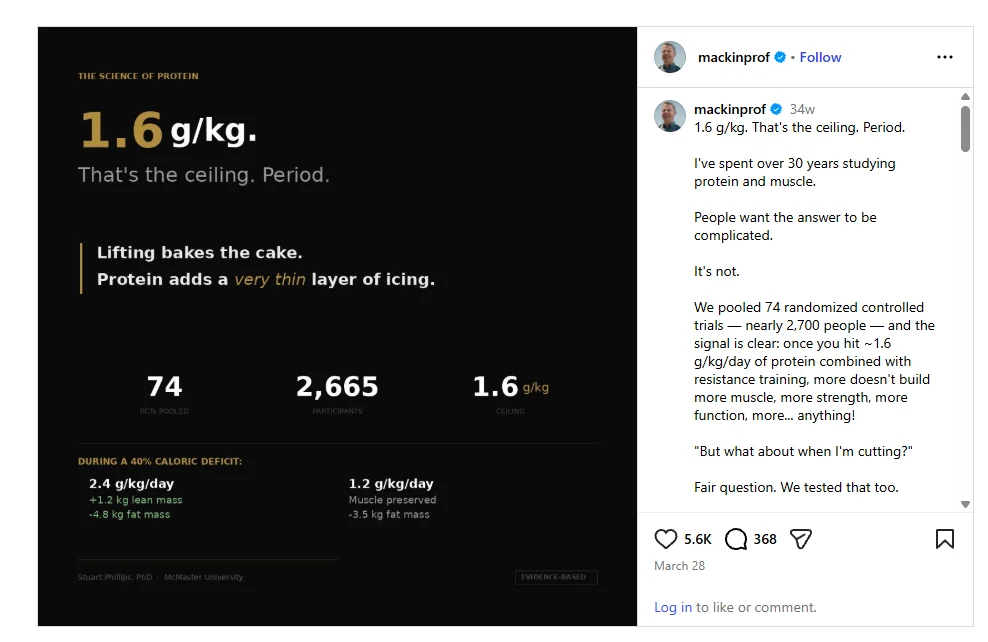
Before examining the scientific evidence, it is important to understand that Phillips has changed his position. In previous research, Phillips and his co-authors supported a protein intake ranging from approximately 1.6 to 2.2 grams per kilogram of body weight per day. However, in a more recent Instagram post, he described 1.6 g/kg/day as a ceiling, suggesting that consuming more would not provide further benefits.

On page 2 of his new paper, Phillips reproduces the wording from that earlier post:

That's the ceiling. Period.

His current position is somewhat different. Rather than defending 1.6 g/kg/day as an absolute biological limit, Phillips now argues that this amount appears sufficient and that the available research has not convincingly demonstrated additional benefits from consuming more. This is an important change because these are two different scientific claims. Saying that higher protein intakes have not been convincingly shown to produce additional muscle growth is not the same as saying that higher protein intakes cannot produce additional muscle growth.

Phillips also shared his scientific papers on protein intake and muscle growth on November 25, 2026, as shown in Figure 1.

Figure 1: Phillips’s Instagram ceiling statement

Figure 1. Stuart M. Phillips’s Instagram post from March 28, stating that 1.6 g/kg is the ceiling for protein intake. Source: Instagram (@mackinprof).

Position Scientific meaning
Earlier research 1.6–2.2 g/kg/day was presented as a range.
Original ceiling claim Consuming more than 1.6 g/kg/day would provide no further benefit.
Current position 1.6 g/kg/day appears sufficient based on the available evidence.

Table 1. The development of Phillips's position on daily protein intake. Source: Phillips (2026), pages 1–3 and 9–10.

As shown in Table 1, Phillips is no longer defending the original ceiling claim in its absolute form. The question now is whether the evidence is strong enough to defend his current position of apparent sufficiency.

Fat-Free Mass Is Not Skeletal Muscle Mass

One of the strongest arguments in Phillips's paper is his criticism of how researchers measure muscle growth. Many people believe that when a scientific study reports an increase of one kilogram in lean body mass, the participants have gained one kilogram of muscle. Unfortunately, that is not necessarily what happened. Fat-free mass includes everything in the body that is not fat. This includes skeletal muscles, bones, organs, blood, water, skin and connective tissue. Lean mass measured using a DXA scanner generally excludes bone mineral as well as fat, but it still contains much more than skeletal muscle. These measurements can be useful for studying changes in body composition. However, they cannot always tell researchers exactly how much skeletal muscle a person has gained or lost.

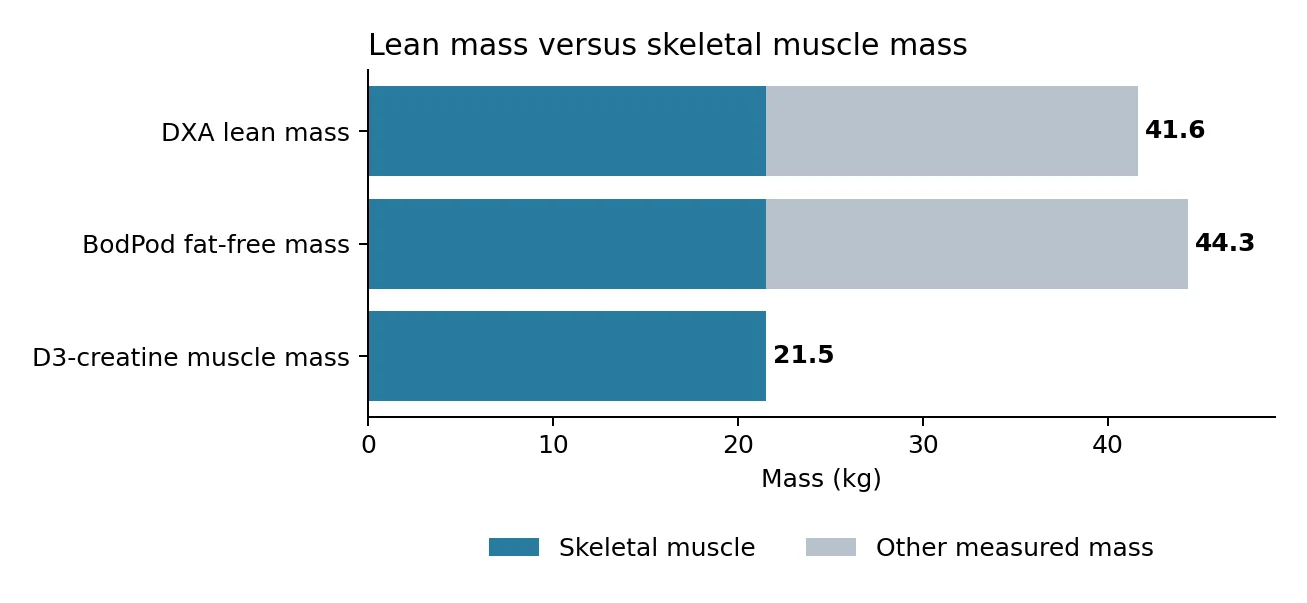
Phillips illustrates this problem using a study by D'Souza et al. involving 21 young women. The researchers examined the same women on the same morning using several different methods of measuring body composition. One of these methods was DXA, which stands for dual-energy X-ray absorptiometry. Another was the BodPod, which estimates body composition by measuring how much air a person's body displaces. The researchers also used a method called D3-creatine dilution, which estimates skeletal muscle mass by measuring the body's creatine pool.

The differences were substantial.

Measurement method Measured mass Difference from estimated muscle mass
DXA lean mass 41.6 kg 20.1 kg
BodPod fat-free mass 44.3 kg 22.8 kg
D3-creatine skeletal muscle mass 21.5 kg —

Table 2. Differences between body composition measurements in the same 21 women. Source: D'Souza et al., as reported in Phillips (2026), pages 3–4.

As Table 2 shows, the DXA scanner reported an average lean mass of 41.6 kilograms. However, the estimated amount of skeletal muscle was only approximately 21.5 kilograms. That is a difference of 20.1 kilograms.

Figure 2

Figure 2. Comparison of lean mass, fat-free mass and estimated skeletal muscle mass. Adapted from Figure 1 in Phillips (2026), page 4.

Figure 2 makes the problem easier to understand. Approximately half of what the DXA scanner classified as lean mass was something other than skeletal muscle. Phillips also examines data from 1,376 older men. These measurements showed that the relationship between lean mass and skeletal muscle mass was not constant. In the third of men with the lowest skeletal muscle mass, actual muscle accounted for approximately 41% of lean mass. In the third with the highest muscle mass, it accounted for approximately 53%. Therefore, researchers cannot simply assume that a fixed percentage of lean mass represents skeletal muscle. This becomes particularly important when researchers attempt to determine whether consuming slightly more protein produces additional muscle growth.

Why Changes in Lean Mass Can Be Misleading

The problem is not simply that lean mass and skeletal muscle mass are different. The bigger problem is that lean mass can change without a corresponding change in the amount of skeletal muscle tissue. For example, muscles store carbohydrates in the form of glycogen. When the amount of glycogen stored in the muscles increases, the amount of water stored with it can also increase. A body composition scan may then report an increase in lean mass, even though the person has not built a significant amount of new muscle protein. Phillips provides several examples of this problem on page 7 of his paper. In one study by Bone et al., trained cyclists consumed large amounts of carbohydrates over a period of just 48 hours. Their measured lean mass increased by approximately 2%. When creatine was also included, lean mass increased by approximately 3%.

Two days is an extremely short period in which to build that much new skeletal muscle tissue.

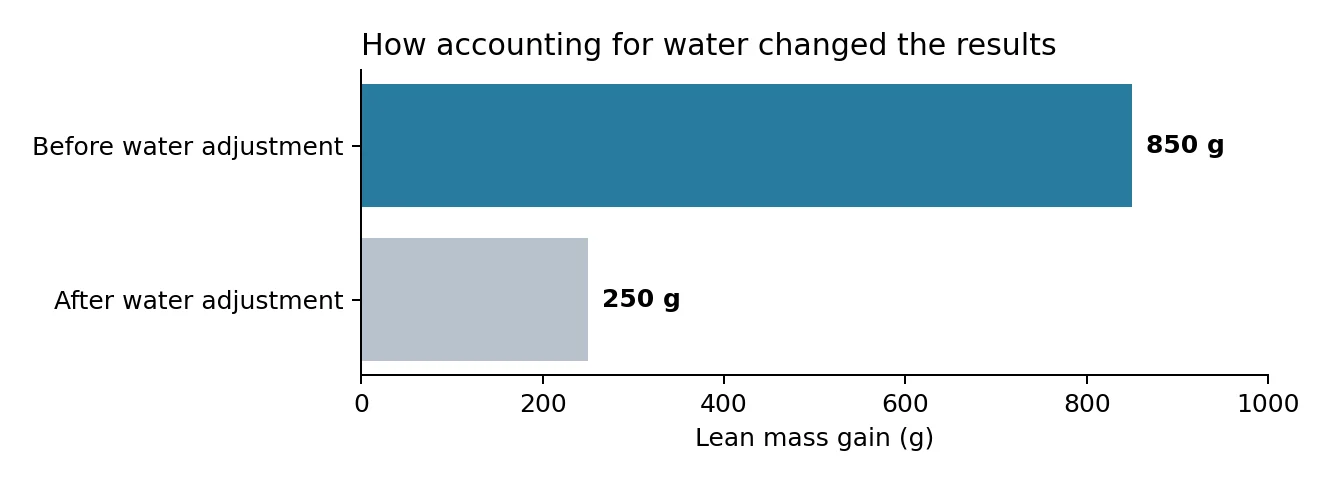
Another study, conducted by Haun et al., reported an increase of 0.85 kilograms in lean mass during the second half of a resistance training program. However, when the researchers accounted for changes in extracellular water, which is water located outside the cells, only 0.25 kilograms remained. The remaining increase was no longer statistically significant.

Figure 3

Figure 3. The effect of accounting for extracellular water on reported lean mass gains. Source: Haun et al., as discussed in Phillips (2026), page 7.

As illustrated in Figure 3, accounting for water reduced the reported increase in lean mass by approximately 71%. This does not mean that the remaining 250 grams were necessarily new muscle tissue either. Phillips is absolutely correct to question these measurements. However, this criticism creates a much bigger problem for the entire discussion surrounding protein requirements. If researchers cannot accurately determine how much skeletal muscle tissue was gained, how can they accurately determine how much protein was required to produce the greatest possible increase in that tissue?

Where Did the 1.6 g/kg Recommendation Come From?

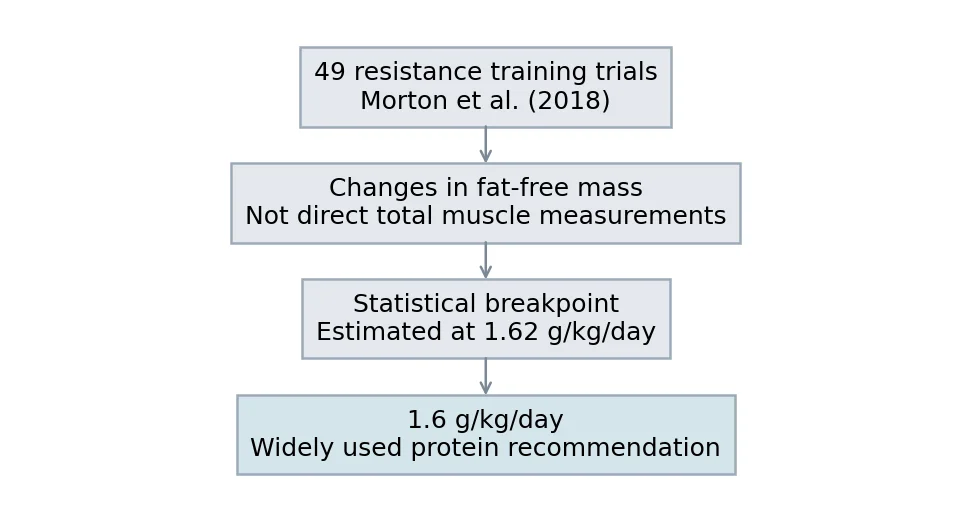
The widely discussed recommendation of 1.6 grams of protein per kilogram of body weight per day comes from a 2018 meta-analysis conducted by Morton et al.. Phillips was one of the authors. A meta-analysis is a scientific investigation that combines the results of several previous studies. By examining these studies together, researchers attempt to identify patterns that may not be obvious when looking at individual studies. The 2018 analysis included 49 trials examining the effects of protein supplementation during resistance training. The researchers calculated that the benefits of additional protein appeared to level off at approximately 1.62 g/kg/day. This figure eventually became the widely recognized recommendation of 1.6 g/kg/day.

However, the researchers calculated this point using changes in fat-free mass, not direct measurements of total skeletal muscle tissue.

Figure 4

Figure 4. The process through which the 1.6 g/kg/day protein recommendation was established.

As shown in Figure 4, the recommendation was not established by directly measuring the amount of skeletal muscle tissue gained at progressively higher protein intakes. It was established through a statistical analysis of changes in fat-free mass. There was also considerable uncertainty surrounding the original estimate. The confidence interval extended from 1.03 to 2.20 g/kg/day. A confidence interval describes the uncertainty surrounding a statistical estimate. It does not mean that every amount within that range has been proven equally effective. Phillips now argues that selecting the upper end of this interval does not establish that consuming 2.2 g/kg/day produces additional benefits. That is a reasonable criticism. However, selecting the central estimate of 1.62 g/kg/day does not remove the uncertainty surrounding the measurement from which that estimate was calculated.

The Fundamental Weakness in Defending 1.6 g/kg

This is the most important issue in Phillips's entire paper.

Phillips acknowledges that his criticism of fat-free mass also applies to his own recommendation. On page 9, he explains that the original 1.6 g/kg/day estimate was derived from fat-free mass. The problem is that he continues to defend this same figure while questioning the ability of the measurement to establish actual skeletal muscle growth. Suppose researchers conduct a study comparing two different protein intakes. One group consumes 1.6 g/kg/day, while the other consumes 2.4 g/kg/day. At the end of the study, both groups have gained approximately the same amount of lean mass. Does this establish that both groups gained the same amount of skeletal muscle tissue?

No. It establishes that the researchers did not detect a meaningful difference in the measurement they used. If that measurement cannot distinguish between changes in muscle tissue, water and other components of lean mass, the amount of actual muscle gained remains uncertain.

Phillips attempts to address this objection by arguing that lean mass measurements are more likely to favor higher protein intakes because lean mass can increase in response to food consumption. Therefore, if higher protein intake does not produce a detectable increase even in lean mass, he considers this evidence against an additional benefit. There is some logic behind this argument. However, it does not solve the measurement problem. A measurement that responds to several different biological changes may produce an apparent benefit that is not real muscle growth, but it may also make a genuine difference in muscle growth difficult to detect.

Research finding What it establishes What it does not establish
Lean mass increases An increase in measured lean mass Exactly how much muscle was gained
Lean mass does not increase No detectable increase in lean mass That no muscle growth occurred
Two groups gain similar lean mass Similar measured body composition changes Identical skeletal muscle growth
A lean mass plateau is identified An estimated plateau in the measured outcome A precise biological limit for muscle growth

Table 3. What lean mass measurements can and cannot establish about skeletal muscle growth.

Table 3 illustrates why the limitations of the measurement must be applied consistently. Phillips also refers to studies that measured muscle fiber size, muscle thickness and strength. These provide additional information and should not be ignored. However, he acknowledges that the studies using more direct measurements of muscle growth are few, small and have produced mixed results. The available evidence may support 1.6 g/kg/day as a reasonable practical recommendation for many individuals. That is different from establishing it as a precisely determined amount sufficient to maximize actual skeletal muscle growth under all relevant training conditions.

Questioning the reliability of the measurement also means questioning the reliability of the number derived from it.

Does the Type and Intensity of Exercise Matter?

Another important question concerns the type of exercise being performed. When someone says that 1.6 g/kg/day is sufficient for people who perform resistance training, what type of training are they referring to? How frequently are these individuals training? How long are their training sessions? How physically demanding are those sessions, and how many calories are they consuming? These questions matter because resistance training is not a single, identical activity performed by everyone. One individual may visit the gym three times per week and perform conventional resistance exercises. Another may train six days per week, combining resistance training with repeated sprints, jumping exercises and other explosive movements. Both individuals exercise, but the physical demands of their training programs are not necessarily the same.

Phillips himself acknowledges on page 12 that demanding training may increase the amount of protein required for maintenance. This is particularly important because protein is not required exclusively for building new muscle. Existing muscle proteins are continuously being broken down and replaced. Training also creates a need for recovery and tissue remodeling, which means repairing and reorganizing existing tissue in response to physical activity. The amount of protein required to support these processes under different training conditions cannot be determined simply by knowing how much new muscle a person is attempting to build.

Training condition Main scientific question
Conventional resistance training How much protein supports muscle growth?
High-volume resistance training Does greater training volume alter protein requirements?
Repeated explosive training Is protein intake sufficient to support recovery and muscle maintenance?
Training without a caloric surplus Can muscle tissue be maintained or increased without excess calories?
Intensive training during a caloric deficit Does a higher protein intake provide additional protection against muscle loss?

Table 4. Different training conditions and the scientific questions that must be answered before establishing protein requirements.

As Table 4 demonstrates, a protein recommendation that appears sufficient under one set of training conditions does not automatically establish that the same amount is sufficient under every other condition.

Protein Requirements During Prolonged Explosive Training

Explosive training involves producing force very rapidly. Sprinting, jumping and performing resistance exercises with explosive movements are examples of this type of physical activity. The question is whether someone who regularly performs demanding explosive training can maintain or increase actual skeletal muscle tissue while consuming 1.6 g/kg/day of protein, particularly when that individual is not consuming more calories than the body uses. This is not necessarily the same question as determining how much protein someone needs to increase muscle size during a conventional resistance training program. A person may not even be attempting to build additional muscle. The objective may simply be to maintain existing muscle tissue while continuing to perform demanding physical activity. There is also an important difference between maintaining body weight and maintaining skeletal muscle tissue. A person's body weight can remain unchanged while the amount of muscle and fat in the body changes.

The evidence presented by Phillips does not establish a specific protein requirement for individuals performing prolonged, demanding explosive training without a caloric surplus. Establishing that requirement would involve directly comparing different protein intakes under those particular conditions and using measurements capable of identifying actual changes in skeletal muscle.

This does not prove that 1.6 g/kg/day is insufficient. It means that the question has not been adequately answered by the evidence presented.

The 100-Gram Protein Study: What Phillips Accepts

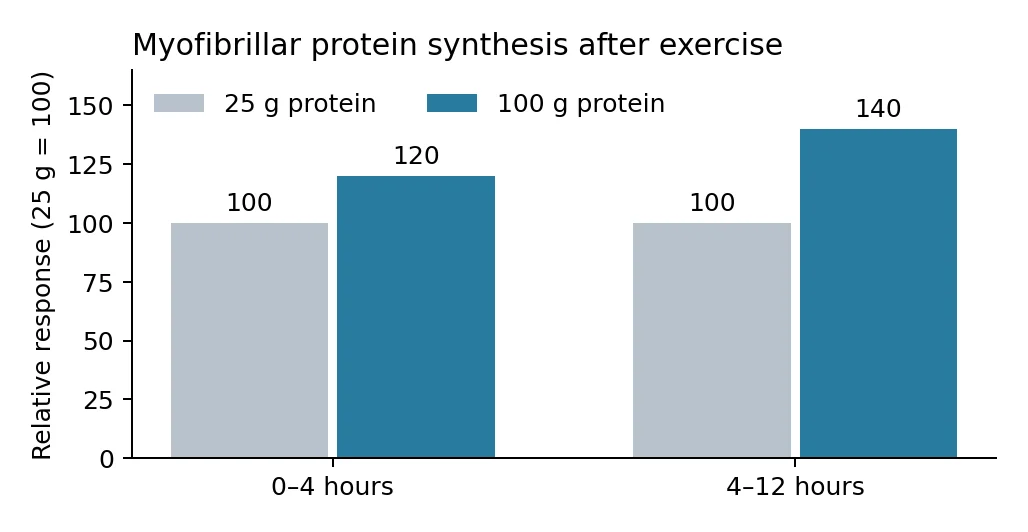
In 2023, Trommelen et al. published a study examining what happens when people consume a large amount of protein after resistance exercise. The researchers wanted to determine whether the body's muscle-building response would continue to increase when considerably more protein was consumed in a single meal. The study involved 36 young men who received either no protein, 25 grams of milk protein or 100 grams of milk protein after resistance exercise. The researchers then monitored what happened inside their bodies over the following 12 hours. One of the measurements was myofibrillar protein synthesis. Myofibrils are structures inside muscle fibers that contain the proteins responsible for muscle contractions. Myofibrillar protein synthesis is the process through which the body produces new proteins for these structures.

The results showed that consuming 100 grams of protein produced a greater and longer-lasting muscle protein synthesis response than consuming 25 grams.

Figure 5

Figure 5. Relative myofibrillar protein synthesis following consumption of 25 or 100 grams of milk protein. Source: Trommelen et al. (2023), as reported in Phillips (2026), pages 13–14. Each time period is normalized separately.

As shown in Figure 5, myofibrillar protein synthesis was approximately 20% higher during the first four hours after consuming 100 grams of protein. Between four and twelve hours, it was approximately 40% higher. Phillips does not dispute these findings.

On page 14, he writes:

These are careful studies, and their short-term findings are not disputed here.

What Phillips questions is whether repeatedly consuming these larger amounts of protein would produce greater skeletal muscle growth over several weeks or months. He acknowledges that, to his knowledge, no study has directly tested this question. This is a reasonable scientific objection. An increase in muscle protein synthesis over 12 hours does not automatically establish that a person will build more muscle over six months. Muscle growth depends on the balance between the production and breakdown of muscle proteins over time. However, the absence of a long-term study also means that the possibility of an additional benefit has not been ruled out. The Trommelen study does not establish that consuming more than 1.6 g/kg/day produces greater long-term muscle growth. It does demonstrate that a much larger amount of protein can produce a greater and more prolonged muscle protein synthesis response under the conditions investigated.

That finding deserves further investigation rather than being treated as irrelevant simply because its long-term effects remain unknown.

Phillips's Own Research Challenges the Recommendation

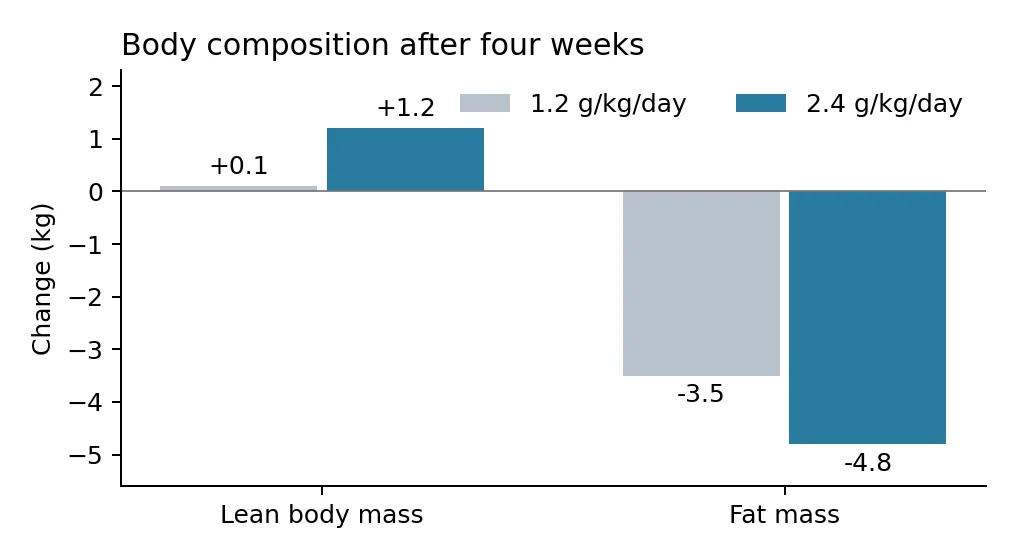
Perhaps one of the most interesting studies discussed in the commentary is a study that Phillips himself co-authored. In 2016, Longland et al. published a randomized controlled trial examining the effects of different protein intakes during intensive exercise and severe calorie restriction. The study involved 40 young men who followed a demanding exercise program six days per week for four weeks. Their training included resistance exercise and high-intensity interval training. During this period, they consumed approximately 40% fewer calories than their estimated energy requirements. The participants were divided into two groups. One group consumed 1.2 grams of protein per kilogram of body weight per day, while the other consumed twice that amount, 2.4 g/kg/day.

The differences in body composition were substantial.

Measurement 1.2 g/kg/day 2.4 g/kg/day
Study duration 4 weeks 4 weeks
Training frequency 6 days/week 6 days/week
Caloric deficit 40% 40%
Change in lean body mass +0.1 kg +1.2 kg
Change in fat mass −3.5 kg −4.8 kg

Table 5. Changes in body composition following four weeks of intensive exercise and a 40% caloric deficit. Source: Longland et al. (2016), as reported in Phillips (2026), page 16.

As Table 5 shows, the group consuming 1.2 g/kg/day gained only 100 grams of lean body mass. The group consuming 2.4 g/kg/day gained 1,200 grams. That represents a difference of 1.1 kilograms of lean body mass in just four weeks, despite both groups following a severely calorie-restricted diet.

Figure 6

Figure 6. Changes in lean body mass and fat mass at two different daily protein intakes. Source: Longland et al. (2016).

Figure 6 illustrates the considerable difference in body composition between the two groups. However, the same scientific criticism discussed throughout this article must also be applied to this study. The researchers measured lean body mass using a four-compartment body composition model. They did not directly establish how much of the additional 1.1 kilograms represented new skeletal muscle tissue. Phillips also points out that the participants were overweight and untrained. Therefore, the findings cannot automatically be applied to lean, highly trained individuals. Physical performance also improved similarly in both groups.

These are legitimate limitations.

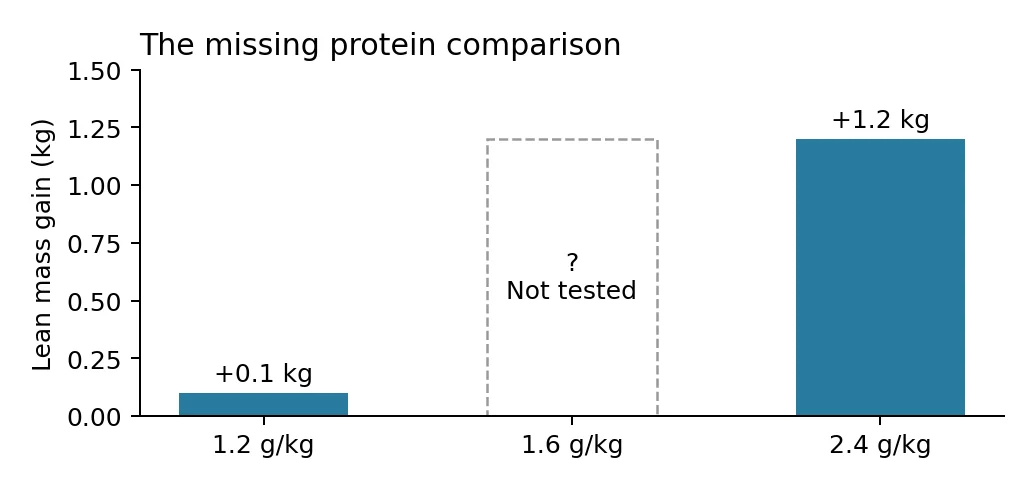
However, Phillips raises another objection. The study compared 1.2 with 2.4 g/kg/day. It did not include a group consuming 1.6 g/kg/day. He is absolutely correct. But this limitation works both ways. The study cannot establish that consuming 2.4 g/kg/day produces better results than consuming 1.6 g/kg/day. Equally, it cannot establish that consuming 1.6 g/kg/day would have produced the same results as consuming 2.4 g/kg/day.

The answer remains unknown.

Figure 7

Figure 7. The missing 1.6 g/kg/day comparison in Longland et al. (2016). The dashed outline represents an untested group, not an estimated result.

As illustrated in Figure 7, the most important protein intake in the current debate was never tested in this particular experiment. It would be scientifically incorrect to use this study as proof that everyone performing intensive exercise needs 2.4 g/kg/day. But it would be equally incorrect to assume that 1.6 g/kg/day would have produced the same body composition changes.

What Do the Other Protein Studies Actually Demonstrate?

Phillips discusses several studies that directly compared 1.6 g/kg/day with higher protein intakes. These studies are important because they come closer to answering the central question. However, examining the details of these experiments reveals several limitations.

The 16-week resistance training study

In a study by Bagheri et al., resistance-trained men consumed either 1.6 or 3.2 g/kg/day of protein while following a supervised training program. After 16 weeks, the resistance-training groups had increased their lean mass by approximately 3.5% and 4%, respectively. The difference between the two groups was not statistically significant. Strength also increased similarly. These results provide evidence against a large additional benefit from doubling protein intake under those particular training conditions. However, the groups contained only approximately a dozen participants each, and the body composition outcome discussed was lean mass rather than a direct measurement of total skeletal muscle tissue. The study therefore cannot confidently exclude a smaller difference in actual muscle growth.

The three-week calorie restriction study

Phillips also discusses a study conducted by Pasiakos et al. in which participants consumed 0.8, 1.6 or 2.4 g/kg/day of protein while following a diet containing 40% fewer calories than their energy requirements. The researchers provided all the participants' meals, which allowed them to control protein and calorie intake more accurately than studies relying on participants to report what they ate. Both higher-protein groups preserved more fat-free mass relative to their weight loss than the group consuming 0.8 g/kg/day. However, consuming 2.4 g/kg/day did not produce a better result than consuming 1.6 g/kg/day.

There is an important detail, though. Phillips acknowledges on page 16 that the exercise performed in this study was deliberately light. This significantly limits what the study can tell us about protein requirements during demanding resistance training or prolonged explosive exercise combined with severe calorie restriction.

The two-week study in resistance-trained men

Another study discussed by Phillips involved 13 resistance-trained men consuming either 1.6 or 2.8 g/kg/day during a period of calorie restriction. Both groups lost fat-free mass. The group consuming more protein lost slightly less, while strength was maintained slightly better in the lower-protein group. The differences were small. However, the researchers acknowledged that a longer study might have produced more meaningful differences. The participants consuming 1.6 g/kg/day also reported greater fatigue and stress, although differences in dietary fat made it difficult to determine whether protein intake was responsible.

Most importantly, the experiment lasted only two weeks.

Study Protein comparison Duration Main limitation
Bagheri et al. 1.6 vs. 3.2 g/kg 16 weeks Small groups; lean mass outcome
Pasiakos et al. 0.8 vs. 1.6 vs. 2.4 g/kg 3 weeks Light exercise; fat-free mass outcome
Two-week pilot trial 1.6 vs. 2.8 g/kg 2 weeks Only 13 men; skinfold-based estimates
Longland et al. 1.2 vs. 2.4 g/kg 4 weeks 1.6 g/kg was not tested

Table 6. Major limitations of the protein comparison studies discussed in Phillips (2026), pages 8–9 and 16–17.

As summarized in Table 6, none of these studies simultaneously provides a large group of participants, a long training period, prolonged explosive training, carefully controlled food intake and direct measurements of total skeletal muscle tissue. Each study provides useful information. However, the limitations of each experiment must be considered before its findings are used to support a general protein recommendation.

Absence of Evidence Is Not Evidence of Absence

One of the most important principles in scientific research is understanding the difference between failing to demonstrate an effect and demonstrating that an effect does not exist. Suppose a study compares two protein intakes and finds no statistically significant difference in muscle growth. This means the researchers did not obtain sufficiently strong statistical evidence that one group gained more muscle than the other. It does not necessarily mean that both groups gained exactly the same amount of muscle.

The ability of a scientific study to detect a difference depends on several factors, including the number of participants, the length of the study, the size of the difference and the accuracy of the measurements. A study involving only 12 participants per group may be capable of detecting a very large difference but may struggle to detect a smaller one. If the measurement itself is also affected by changes in water, glycogen and other components of lean mass, detecting a small difference in actual muscle growth becomes even more difficult. Interestingly, Phillips acknowledges this problem himself. On page 35, he explains that the absence of a demonstrated benefit above 1.6 g/kg/day does not prove that no benefit exists.

Scientific statement Meaning
No statistically significant difference was detected The study did not establish a difference between the groups.
No meaningful difference exists The evidence establishes that any difference is too small to be practically important.
The study was too small A genuine difference may have been missed.
The measurement was insufficient The study may not have accurately measured the outcome being investigated.

Table 7. The difference between failing to demonstrate an additional benefit and establishing that no meaningful additional benefit exists.

As Table 7 explains, these statements are not interchangeable.

Phillips also discusses combining the results of several small studies to improve the ability to detect a difference. This process, known as pooling, can help researchers obtain a more precise estimate of the effects of additional protein. However, combining several studies does not necessarily solve the original measurement problem. If the studies measured fat-free mass rather than actual skeletal muscle tissue, combining their results still produces an estimate based on fat-free mass. The statistical estimate may become more precise, but it does not automatically become a more accurate measurement of skeletal muscle growth.

This distinction is fundamental to the entire protein debate.

What Research Is Still Needed?

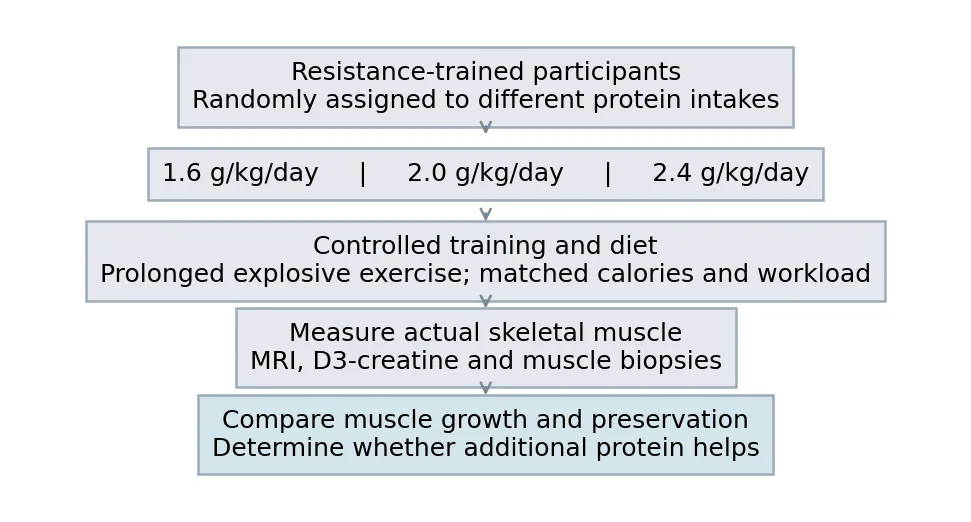
To his credit, Phillips recognizes many of the weaknesses in the available research and explains what future studies would need to do to resolve the disagreement. On page 36, he proposes recruiting resistance-trained participants, carefully controlling or monitoring their food intake, including sufficiently large numbers of men and women, and using better methods of measuring skeletal muscle. He specifically mentions magnetic resonance imaging (MRI), D3-creatine dilution and muscle biopsies where possible. MRI allows researchers to examine the size and structure of skeletal muscles. D3-creatine dilution provides an estimate of total skeletal muscle mass. Muscle biopsies involve removing a small sample of muscle tissue so that researchers can examine the muscle fibers themselves. These methods provide information that conventional lean mass measurements cannot provide on their own.

However, the nature of the training program must also be considered. If the objective is to establish whether 1.6 g/kg/day is sufficient for people performing prolonged, demanding explosive training, then the experiment must actually include that type of training. A study designed around conventional resistance exercise cannot automatically answer every question concerning the protein requirements of individuals performing more than an hour of demanding explosive exercise.

Figure 8

Figure 8. An illustrative research design for investigating protein requirements during prolonged explosive training. This is a proposed experiment, not a completed study.

Figure 8 illustrates how different protein intakes could be compared while controlling the amount of exercise and the number of calories consumed. The study would also need to last long enough and include enough participants to detect meaningful differences in muscle growth or muscle preservation. Ideally, separate experiments would examine individuals maintaining their body weight and individuals training during a caloric deficit.

Until such research is conducted, the specific protein requirements for these training conditions remain uncertain.

My Perspective

My biggest concern with Phillips's paper is not the amount of protein he recommends. It is the scientific foundation upon which that recommendation rests. I agree with his criticism of using fat-free mass as a measurement of skeletal muscle growth. In fact, I consider this one of the most important points in his entire paper. For years, scientific studies have reported increases in lean body mass, and those increases have frequently been described as increases in muscle mass. Phillips correctly explains why these two measurements should not be treated as if they were the same thing.

However, once that distinction is recognized, it must be applied consistently.

The figure of 1.6 g/kg/day was originally established through an analysis of changes in fat-free mass. If the measurement is insufficient to accurately determine how much actual skeletal muscle tissue was gained, then the accuracy of the protein recommendation derived from that measurement must also be questioned. Why should the uncertainty surrounding fat-free mass measurements apply to protein intakes above 1.6 g/kg/day but not equally affect confidence in the 1.6 g/kg/day figure itself? Phillips acknowledges that the criticism applies to both sides. Nevertheless, his conclusion continues to defend 1.6 g/kg/day as sufficient for individuals performing resistance training, whether their objective is muscle growth, fat loss or both. I believe that conclusion goes further than the available evidence allows.

My second concern is the nature of the exercise being performed. Someone who performs a conventional resistance training session is not necessarily placing the same demands on the body as someone who performs prolonged explosive exercise. I would like to see evidence demonstrating that consuming 1.6 g/kg/day of protein is sufficient to maintain or increase actual skeletal muscle tissue in individuals who regularly perform more than an hour of demanding explosive training without consuming excess calories.

Where is that evidence?

The Longland study is particularly interesting because Phillips himself participated in research showing substantially greater lean body mass gains when participants consumed 2.4 rather than 1.2 g/kg/day during intensive exercise and severe calorie restriction. He correctly explains that 1.6 g/kg/day was not tested. However, that does not establish that 1.6 g/kg/day would have been sufficient to produce the same results as 2.4 g/kg/day. The experiment simply did not answer that question. The same uncertainty applies to the Trommelen study. Phillips accepts that consuming 100 grams of protein produced a greater and more prolonged myofibrillar protein synthesis response than consuming 25 grams. He questions whether repeatedly consuming such large amounts would produce greater muscle growth over time. That is a legitimate scientific question, but it remains unanswered.

I am not arguing that everyone needs more than 1.6 grams of protein per kilogram of body weight per day. Nor am I arguing that consuming increasingly large amounts of protein will continuously produce more muscle. Such claims would also require scientific evidence. What I am questioning is whether the available research is sufficiently accurate and comprehensive to establish that 1.6 g/kg/day is enough to maximize actual skeletal muscle growth across different training conditions. There is a considerable difference between a practical recommendation based on the best evidence currently available and a protein requirement that has been accurately established through direct measurements of skeletal muscle tissue.

The current evidence may support the former. I do not believe it has established the latter.

Conclusion

Phillips's new scientific commentary raises an important issue that deserves considerably more attention in exercise and nutrition research. Fat-free mass is not skeletal muscle mass, and an increase in one does not necessarily represent an equivalent increase in the other. However, recognizing this problem also introduces uncertainty into the research that established the widely accepted protein recommendation of 1.6 g/kg/day. The available studies suggest that consuming more than this amount may provide little additional benefit under many of the training conditions investigated. Nevertheless, small groups of participants, short study periods, differences in training programs, uncontrolled food intake and the widespread use of fat-free mass measurements limit the conclusions that can be drawn. Whether 1.6 g/kg/day is sufficient to maintain or increase actual skeletal muscle tissue during prolonged, demanding explosive training without a caloric surplus remains an important unanswered question.

Future research must move beyond simply measuring changes in lean mass and begin investigating actual skeletal muscle tissue more accurately. Until then, the absence of convincing evidence supporting higher protein intakes should not be confused with conclusive evidence that higher protein intakes cannot provide additional benefits.

If the measurement used to establish a recommendation is scientifically questionable, then the accuracy of the recommendation itself must also remain open to scientific questioning.

RELATED ARTICLES

Scientific References

1. Phillips, S. M. (2026). Show me the muscle: how much can protein really add to exercise gains? SportRχiv. November 2026. Version 2. Preprint, not peer-reviewed.

Full paper: https://sportrxiv.org/index.php/server/preprint/view/1102/2563

2. Morton, R. W., et al. (2018). A systematic review, meta-analysis and meta-regression of the effect of protein supplementation on resistance training-induced gains in muscle mass and strength in healthy adults. British Journal of Sports Medicine, 52(6), 376–384.

DOI: 10.1136/bjsports-2017-097608

3. D'Souza, A. C., et al. (2024). Application of the COSIAM method for muscle protein turnover and skeletal muscle mass in young females: a comparison of methods for body composition assessment. Advances in Exercise and Health Sciences, 1, 248–259.

DOI: 10.1016/j.aehs.2024.11.003

4. Orwoll, E. S., et al. (2020). The importance of muscle versus fat mass in sarcopenic obesity: a re-evaluation using D3-creatine muscle mass versus DXA lean mass measurements. The Journals of Gerontology: Series A, 75(7), 1362–1368.

DOI: 10.1093/gerona/glaa064

5. Tavoian, D., et al. (2019). Changes in DXA-derived lean mass and MRI-derived cross-sectional area of the thigh are modestly associated. Scientific Reports, 9, 10028.

DOI: 10.1038/s41598-019-46428-w

6. Bone, J. L., et al. (2017). Manipulation of muscle creatine and glycogen changes dual x-ray absorptiometry estimates of body composition. Medicine & Science in Sports & Exercise, 49(5), 1029–1035.

DOI: 10.1249/MSS.0000000000001174

7. Haun, C. T., et al. (2018). Effects of graded whey supplementation during extreme-volume resistance training. Frontiers in Nutrition, 5, 84.

DOI: 10.3389/fnut.2018.00084

8. Nunes, E. A., et al. (2022). Systematic review and meta-analysis of protein intake to support muscle mass and function in healthy adults. Journal of Cachexia, Sarcopenia and Muscle, 13(2), 795–810.

DOI: 10.1002/jcsm.12922

9. Trommelen, J., et al. (2023). The anabolic response to protein ingestion during recovery from exercise has no upper limit in magnitude and duration in vivo in humans. Cell Reports Medicine, 4(12), 101324.

DOI: 10.1016/j.xcrm.2023.101324

10. Longland, T. M., Oikawa, S. Y., Mitchell, C. J., Devries, M. C., & Phillips, S. M. (2016). Higher compared with lower dietary protein during an energy deficit combined with intense exercise promotes greater lean mass gain and fat mass loss: a randomized trial. American Journal of Clinical Nutrition, 103(3), 738–746.

DOI: 10.3945/ajcn.115.119339

11. Bagheri, R., et al. (2023). Effects of 16 weeks of two different high-protein diets with either resistance or concurrent training on body composition, muscular strength and performance, and markers of liver and kidney function in resistance-trained males. Journal of the International Society of Sports Nutrition, 20(1), 2236053.

DOI: 10.1080/15502783.2023.2236053

12. Pasiakos, S. M., et al. (2013). Effects of high-protein diets on fat-free mass and muscle protein synthesis following weight loss: a randomized controlled trial. FASEB Journal, 27(9), 3837–3847.

DOI: 10.1096/fj.13-230227

13. Helms, E. R., et al. (2015). High-protein, low-fat, short-term diet results in less stress and fatigue than moderate-protein, moderate-fat diet during weight loss in male weightlifters: a pilot study. International Journal of Sport Nutrition and Exercise Metabolism, 25(2), 163–170.

DOI: 10.1123/ijsnem.2014-0056