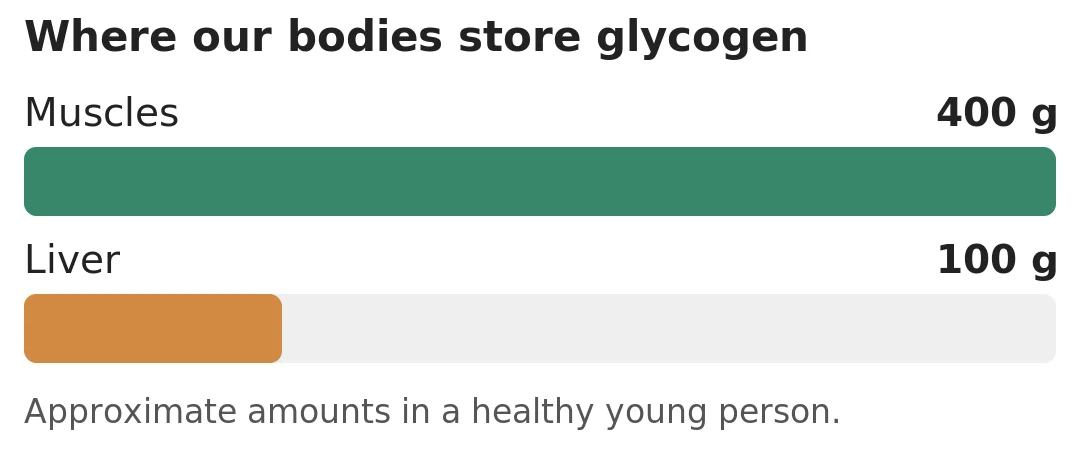
Figure 2. The amount of glycogen stored in the muscles and liver, as described in the scientific review.
As Figure 2 illustrates, our muscles provide a much larger storage area than our liver. When we exercise, our muscles use some of this stored fuel, creating room to store more. However, when people become less physically active and begin losing muscle as they grow older, their bodies may have greater difficulty storing and using glucose. This can contribute to problems controlling blood sugar and increase the risk of developing type 2 diabetes.
Our muscles, therefore, are important for far more than our appearance or our ability to lift heavy objects.
The Tiny Power Stations Inside Our Cells
Imagine a city that depends on thousands of small power stations to keep its homes, hospitals, factories and transportation systems running. If those power stations gradually began breaking down, the entire city would eventually experience problems. Something similar happens inside our bodies.
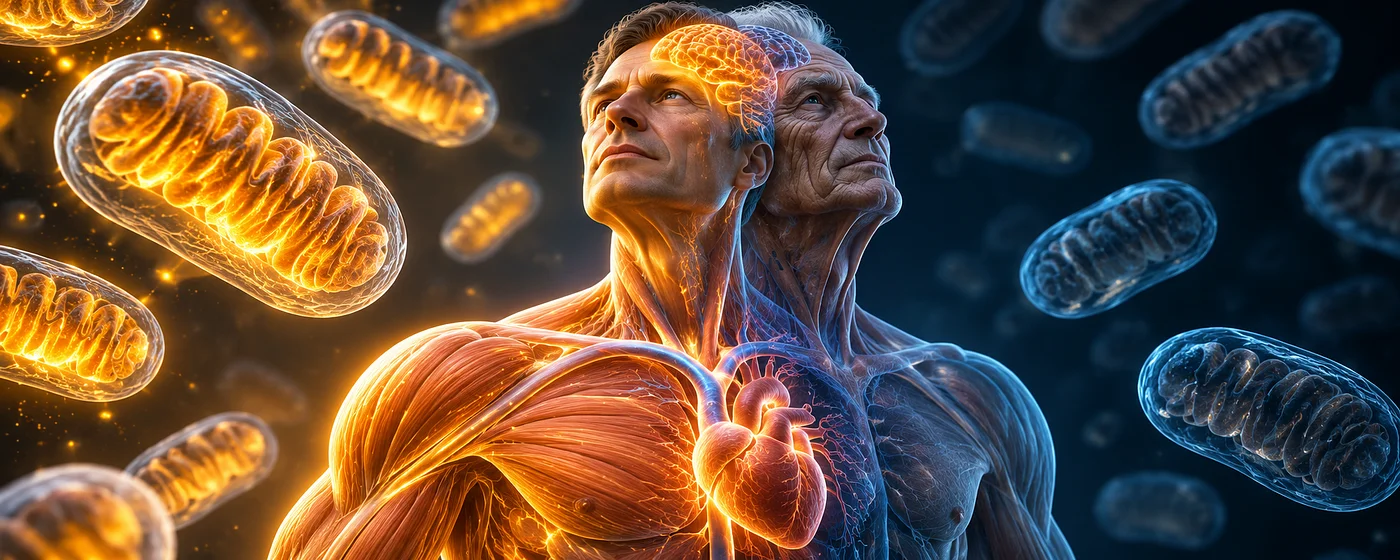
Our cells contain tiny structures called mitochondria, which act like miniature power stations. They help convert the food we eat into a form of energy that our cells can use. Our bodies are constantly removing damaged mitochondria and producing new ones, but these processes can become less efficient as we grow older. If damaged mitochondria begin to accumulate, our cells may struggle to produce enough energy to meet their needs, particularly in parts of the body that require large amounts of energy, such as our brain, heart and muscles. The review also discusses how physical activity encourages the processes that help maintain these tiny power stations.
Why Scientists Are Interested in NAD+
Anyone who follows longevity research has probably heard of NAD+, but what exactly is it, and why is it so important?
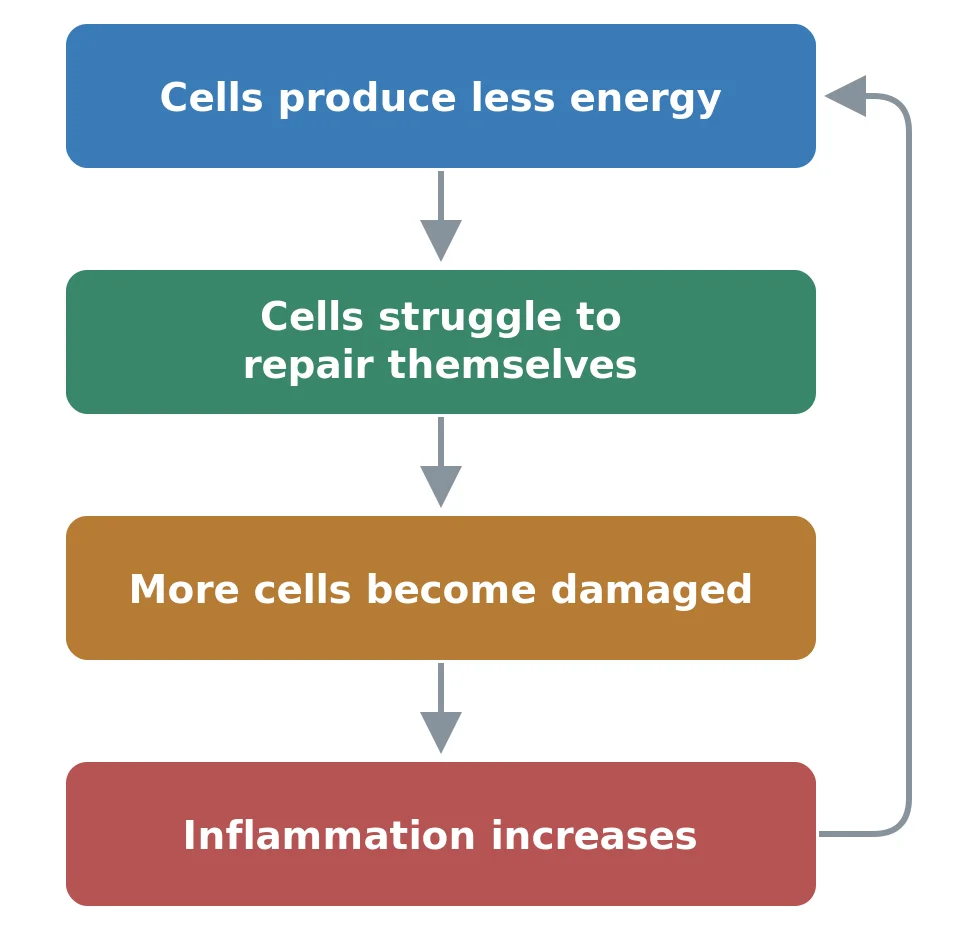
NAD+ is a substance naturally found inside our cells. It helps our bodies turn food into usable energy and supports the systems responsible for repairing damaged DNA. Without enough of it, many important jobs inside our cells become more difficult to perform. The problem is that NAD+ levels can decline as we grow older. Our bodies may become less efficient at making and recycling it, while increasing cellular damage and inflammation can cause more of it to be used. The author believes that this decline may be particularly harmful to our brain and muscles, which depend heavily on a reliable supply of energy.
This is one reason why scientists are investigating supplements that may help restore NAD+ levels.
What Does Calcium Have to Do With Aging?
When most people think about calcium, they think about bones and teeth. However, calcium is also involved every time we move a muscle, every time our nerves send a message and every time our heart beats. Our cells must carefully control the amount of calcium inside them, and doing so requires energy. When cells become less efficient at producing energy, they may also become less efficient at controlling calcium. If too much calcium builds up inside certain cells, it can damage their tiny power stations and eventually cause the cells to die. The author highlights this problem in the brain, heart and skeletal muscles.
Calcium also plays an important role in maintaining healthy bones. Changes in the way our bodies control calcium, combined with reduced physical activity and other age-related changes, may contribute to the weakening of our bones over time.
Why Movement Is Important for the Entire Body
One of the most interesting sections of this review examines what happens throughout our bodies when we move. Every time we walk, run, climb stairs or perform other physical activities, our muscles pull on our bones. This does more than strengthen them. It also encourages the release of substances that can influence other parts of the body, including organs that are nowhere near the muscles being used.
For example, our bones produce a substance called osteocalcin. Although it helps maintain healthy bones, research suggests that it may also play a role in controlling blood sugar and supporting brain function. Studies involving older adults have found a connection between lower levels of osteocalcin and poorer memory and thinking abilities. Our muscles also release substances that can influence the brain. One of these substances is called irisin. Scientists are investigating whether irisin helps protect the brain against inflammation and damage, as well as improving the way our bodies use energy. The review points out that low levels of irisin have been observed in physically inactive older people.
These findings help explain why physical activity can benefit parts of the body that we are not directly exercising.
Movement Is More Than Exercise — It Keeps Us Alive
We often think of movement as something we do when we walk, run or go to the gym. However, the author reminds us that some of the most important movements in our bodies take place without us having to think about them. Our diaphragm must continually contract to allow us to breathe. Our heart must continually contract to pump blood. Muscles inside our digestive system must move food through our intestines. All these movements require energy, and without them, we could not survive.
The author describes active movement as a fundamental expression of life.
As we grow older, problems producing energy may affect our ability to move, while becoming less physically active may create additional problems with the way our bodies use and store energy. Once again, we see how one problem can make another worse.
Why Long-Term Stress Can Damage Our Bodies
Stress is not always a bad thing. Our bodies release hormones such as adrenaline and cortisol to help us respond to difficult or dangerous situations. Problems can arise, however, when these hormones remain elevated for long periods. According to the review, prolonged stress can encourage the breakdown of bone while making it more difficult for our bodies to build new bone. It can also contribute to muscle loss, interfere with blood sugar control and affect the health of our digestive system. These changes may become particularly harmful in older people whose bodies are already struggling to maintain and repair themselves.
Stress can also interfere with sleep, creating yet another problem.
What Happens Inside Our Brains When We Sleep?
While we are sleeping, our brains are not simply resting. They also have a system that helps remove waste products that accumulate during the day. Imagine going several weeks without properly cleaning your home. Dust, dirt and rubbish would gradually begin to accumulate. Our brains face a somewhat similar problem when the systems responsible for removing waste become less efficient.
The author discusses two proteins called beta-amyloid and tau. Abnormal buildups of these proteins are associated with Alzheimer's disease. Research suggests that long-term sleep disturbances may interfere with the brain's ability to remove certain waste products, potentially contributing to damage over time. Getting enough sleep, therefore, may be important not only for how energetic we feel the following morning but also for maintaining the health of our brains over many years.
How the Health of Our Intestines Can Affect Our Brains
It may seem strange that what happens inside our intestines can affect how we think and feel, but our intestines and brain are constantly communicating with each other. One of the main connections between them is a large nerve called the vagus nerve. They also communicate through hormones, substances produced by intestinal bacteria and messages from our immune system. As we grow older, changes in the bacteria living inside our intestines, combined with long-term stress and inflammation, may interfere with this communication. The protective lining of our intestines can also become weaker, allowing unwanted substances to pass through more easily and potentially causing inflammation elsewhere in the body.
Interestingly, the author discusses how active skeletal muscles may help the body process certain substances that could otherwise have harmful effects on the brain. This is yet another example of how the activity of our muscles may influence our mental health.
Our Cells Have Their Own Garbage Disposal System
Throughout our lives, parts of our cells become damaged and need to be replaced. Fortunately, our cells have their own cleaning and recycling systems.
One part of this system involves tiny structures called lysosomes. Their job is to break down damaged proteins, fats and other unwanted materials so that some of their components can be reused. However, these little recycling centers require energy to work properly. If our cells cannot produce enough energy, they may become less efficient at removing damaged material, allowing it to gradually accumulate. This can be particularly harmful to cells that remain with us for much of our lives, such as many of the nerve cells in our brains and muscle cells in our hearts. Unlike some other cells in our bodies, these cells are not easily replaced. Their ability to repair and maintain themselves is therefore extremely important.
Why Our Tissues Become Stiffer as We Grow Older
One of the more noticeable changes that occurs with age is the gradual loss of flexibility throughout our bodies. Our skin becomes less elastic, our blood vessels can become stiffer, and the tissues surrounding our muscles and joints can lose some of their flexibility. Part of the problem involves a process called glycation. This occurs when sugar attaches itself to proteins inside our bodies. Over time, this can damage important proteins such as collagen, which helps give our tissues their strength and structure.
The review also discusses the network of material surrounding our cells. This network, known as the extracellular matrix, helps hold our tissues together and allows cells to communicate and repair damage. Like many other structures inside our bodies, it must constantly be maintained and renewed. When our bodies become less efficient at producing energy and carrying out repairs, this network may gradually deteriorate. The consequences can affect many different parts of the body.
The Protective Coating Inside Our Blood Vessels
Many people are unaware that the inside of our blood vessels is covered by a delicate protective layer called the glycocalyx.
This layer helps protect our blood vessel walls, allows blood to flow smoothly and helps control which substances can pass from our blood into the surrounding tissues. It is constantly exposed to the movement of blood and must regularly be repaired. As we grow older, this protective coating can become damaged. When that happens, our blood vessels may become more vulnerable to inflammation, unwanted blood clotting and difficulties expanding to allow more blood to flow through them. Damage to this layer has also been associated with high blood pressure and hardening of the arteries.
Maintaining healthy blood vessels, therefore, involves more than simply keeping cholesterol and blood pressure under control.
What Happens When Our Body's Drainage System Becomes Less Efficient?
Our bodies have a network of vessels known as the lymphatic system. Think of it as part of the body's drainage and cleaning system. It collects excess fluid from our tissues, returns it to our bloodstream and helps our immune system identify potentially harmful substances. It also plays an important role in absorbing fats from the food we eat. When this system does not work properly, fluid can accumulate inside our tissues, and inflammation can increase.
The author discusses how long-term inflammation may damage lymphatic vessels and interfere with their ability to perform these important jobs. Problems with the lymphatic system have been associated with several conditions, including obesity, cardiovascular disease and certain neurological disorders.
Could Carnosine Help Protect Our Aging Tissues?
Another interesting substance discussed in the review is carnosine, which is naturally found inside our bodies, particularly in our skeletal muscles. One of its important properties is its ability to help protect proteins against damage caused by sugar. As mentioned earlier, when sugar attaches itself to proteins, it can gradually damage tissues and reduce their flexibility. Carnosine may help limit some of this damage. It can also help neutralize certain harmful substances produced when fats inside our cells become damaged. The author discusses how declining carnosine levels may contribute to several age-related health problems, including damage to blood vessels, diabetes and diseases affecting the brain.
Although these properties make carnosine an interesting substance for longevity research, it has not been demonstrated that taking carnosine supplements can extend human lifespan.
Could NMN and NR Help Slow Down Aging?
Towards the end of the review, the author examines two supplements that have received considerable attention in recent years: nicotinamide mononucleotide (NMN) and nicotinamide riboside (NR). Our bodies can use both substances to produce NAD+. Research discussed in the review suggests that increasing NAD+ levels may help improve the way certain tissues use energy, control blood sugar and respond to inflammation. Experimental research has also produced encouraging results involving the brain, muscles, liver and cardiovascular system.
However, there is an important difference between increasing the amount of NAD+ inside our bodies and actually slowing down human aging.
Much of the evidence discussed in the review comes from laboratory and animal research. Although human studies have demonstrated that these supplements can increase certain measurements of NAD+, scientists have not yet established that taking NMN or NR can prevent the overall physical deterioration associated with aging or extend human lifespan. The author acknowledges that further research is needed.
My Perspective: Are We Paying Enough Attention to the Body's Movement System?
What I particularly appreciate about this scientific review is that the author recognizes the importance of the body's movement system and its relationship with the health of other organs. Rather than looking at aging simply as a collection of problems occurring inside individual cells, he examines how these problems are connected and how the deterioration of one part of the body can affect another.
However, I believe there is another important question that needs to be asked. Is declining energy production causing us to lose our ability to move, or could losing our ability to move also contribute to declining energy production throughout the body?
Perhaps both are happening.
We know that when muscles contract, they release substances that can influence other organs. We also know that physical movement helps maintain the health of our bones, encourages our muscles to use glucose and stimulates the processes responsible for maintaining the tiny power stations inside our cells. If we gradually lose our ability to move as we grow older, we may also lose some of the biological benefits that these movements provide. This is why I believe we need to pay considerably more attention to the health of the nerves that control our muscles, rather than concentrating primarily on muscle mass or what happens inside individual muscle cells. A muscle cannot contract voluntarily without receiving a signal from the nervous system. Having healthy muscles is important, but so is maintaining the ability of our nervous system to control those muscles effectively.
This also raises an important question about supplements such as NMN and NR. Even if we could restore NAD+ levels to those commonly found in younger people, would that restore the ability of an older person to move like someone several decades younger? Would it restore their speed, balance, coordination, reflexes and ability to produce rapid, powerful movements?
These are questions that cannot be answered simply by measuring NAD+ levels in the blood.
I would like to see more longevity research examining the relationship between the gradual deterioration of our movement system and the changes that occur throughout the rest of our bodies. Understanding this relationship may help us better understand why we age and what we can do to remain healthier and physically capable for longer.
Conclusion
This scientific review provides an interesting explanation of how declining energy production may contribute to many of the problems we experience as we grow older. From the deterioration of our muscles and brain to increasing inflammation, stiffening tissues and difficulties repairing damaged cells, many of these changes appear to be connected. The review also highlights the importance of physical activity and examines the potential benefits of substances such as NMN, NR and carnosine.
Although scientists are still investigating whether these substances can meaningfully slow down human aging, the importance of maintaining our body's ability to produce energy, repair itself and remain physically active deserves considerable attention.
Reference
Błaszczyk, J. W. (2026). Degradation of the Molecular Basis of Life During the Aging Process. International Journal of Molecular Sciences, 27(5), 2419.
DOI: 10.3390/ijms27052419