Aging Is a Network Failure: Why Training One Part of the Body Is Not Enough

Your content goes here.

Aging Is a Network Failure: Why Training One Part of the Body Is Not Enough

By Tony Ruggia | I AM LONGEVITY | Motor Units | November 28, 2026
The Network Degradation Model: A Whole-Body View of Neuromuscular Aging

Introduction: The Paradox of the Lifelong Athlete

How can someone spend an entire lifetime training, preserve exceptional muscular strength and explosive power well into old age, and still eventually lose the physical abilities they spent decades protecting?

Perhaps part of the answer lies in how we view the human body. We tend to think of muscles as individual structures that can be trained and preserved independently. Yet the nervous system does not control movement in this manner. Motor neurons receive shared signals, muscles work together, and sensory information continuously travels back to the spinal cord and brain. Movement is the product of an interconnected biological network.

What happens when certain regions of that network remain exceptionally well trained while others gradually deteriorate? Could deterioration in one region eventually compromise the function of another, even after decades of specialized training?

This is the central proposition of my Systemic Motor Unit Integrity Hypothesis and Network Degradation Model. Rather than viewing neuromuscular aging solely as the deterioration of individual muscles and their motor units, I propose that we must also investigate the progressive deterioration of the network that connects and coordinates them.

The Human Body Is a Network, Not a Collection of Independent Muscles

When we exercise, we often divide the body into separate regions. We train our legs, chest, shoulders, back and arms. A sprinter concentrates on developing speed and explosive power, while a cyclist spends thousands of hours training the muscles required for cycling. This approach makes sense when the objective is to improve performance in a particular activity. But is it sufficient when the objective is to preserve youthful neuromuscular function throughout the entire body for a lifetime?

The distinction is important because muscles do not decide independently when to contract, how much force to produce or how quickly to respond. These functions depend on the nervous system. Even a relatively simple movement requires the nervous system to coordinate the activity of multiple motor units, regulate muscular force and maintain stability.

The question, therefore, is not simply how many motor units an individual can preserve in a particular muscle. It is also how effectively the entire neuromuscular system continues to function as an integrated network.

The Closed-Loop Nature of the Neuromuscular System

The communication between the nervous system and skeletal muscles is not a one-way process. The brain and spinal cord send signals to the muscles, but information also travels in the opposite direction. Sensory receptors throughout the body continuously provide information about muscle length, tension, joint position and movement.

This creates what is known as closed-loop sensorimotor control. The nervous system can use the information returning from the body to adjust its commands. It also uses predictive mechanisms to prepare movements before sensory feedback becomes available.

Figure 1 illustrates the feedback loop connecting motor commands, muscular contraction and sensory information.

Brain and spinal cordMotor commandsMotor neuronsMuscle contractionSensory receptorsMuscle, tendon, joint and skinReturning sensory feedbackContinuous adjustment of movement
Figure 1. Simplified representation of the neuromuscular feedback loop.

This means that the quality of movement depends not only on the signals leaving the nervous system but also on the information returning to it. If the function of one component changes, the nervous system may have to reorganize how it controls the movement.

This brings us to an important question. What happens when deterioration gradually develops in different regions of this interconnected system over several decades?

What the Circulatory System Can Teach Us About Neuromuscular Aging

Consider what happens when an artery supplying one of the kidneys gradually becomes narrower because of atherosclerosis. The problem may initially be confined to that particular artery. However, the reduced blood supply can cause the kidney to activate mechanisms that increase blood pressure throughout the body.

Over time, this compensatory response can place additional strain on the heart and other organs. The original obstruction does not have to travel anywhere for its consequences to extend beyond the affected region.

The circulatory system and the neuromuscular system operate through different biological mechanisms, but this example illustrates an important principle: deterioration within one part of an interconnected biological system can have consequences elsewhere.

My Network Degradation Model proposes that a comparable principle may apply to neuromuscular aging. Regional deterioration may initially be compensated for by other components of the nervous and muscular systems. An individual may continue to perform exceptionally well in a particular activity despite deterioration elsewhere.

However, if regional deterioration continues for decades, could these compensatory mechanisms eventually become insufficient? Could the consequences eventually reach the very muscles and motor units that the individual has spent a lifetime training?

If this hypothesis is correct, preserving individual muscles without preserving the integrity of the wider neuromuscular network may ultimately prove insufficient.

Common Drive: The Hidden Coordination of Movement

One of the most important concepts for understanding my Network Degradation Model is something known in neuroscience as common drive.

When we voluntarily contract a muscle, the motor neurons controlling that muscle do not necessarily receive entirely independent instructions. Many receive shared neural signals that help regulate their activity together. This allows the nervous system to coordinate muscular force without having to control every motor neuron separately.

In 1994, De Luca and Erim described the importance of common drive in regulating muscle force. In 2002, the same researchers investigated common drive across two muscles working together. This is particularly important because it demonstrates that shared neural control is not necessarily confined to the motor units within a single muscle.

Imagine moving your index finger. Although your attention is directed toward that finger, the nervous system may also activate other muscles to stabilize the hand, wrist and forearm. Depending on your position and the task, additional muscles may contribute to maintaining stability elsewhere in the body. Much of this coordination occurs without your conscious awareness.

Common drive does not mean that every motor neuron in the body fires simultaneously. It means that groups of motor neurons can receive shared inputs, allowing different parts of the muscular system to work together according to the demands of a particular movement.

This distinction is fundamental to understanding why the preservation of individual muscles may not be enough to preserve the quality of movement throughout life.

Can We Voluntarily Control a Single Motor Unit?

If motor units functioned as completely independent components, would it be possible to voluntarily control one without influencing the activity of others?

Several experiments have investigated precisely this question.

In 2022, Bräcklein et al. investigated whether people could learn to control individual motor units using real-time feedback. Their findings showed that voluntary control was constrained by shared neural input, even when participants were specifically trained to manipulate motor unit activity.

In 2024, Rossato et al. provided further evidence that voluntary control of individual motor units operates within groups receiving common neural inputs.

More recently, a 2026 study examining motor unit firing during neurofeedback investigated whether participants could independently control the firing rates of motor unit pairs in the tibialis anterior, a muscle located at the front of the lower leg. The experiments found no evidence of independent firing-rate control under the tested conditions.

Table 1 summarizes the three experiments on voluntary motor unit control.

StudyExperimental approachMain finding
Bräcklein et al. (2022)Training with motor unit feedbackControl constrained by common input
Rossato et al. (2024)Voluntary control of individual motor unitsControl organized within groups sharing input
2026 neurofeedback studyIndependent firing-rate control of motor unit pairsNo evidence of independent control under tested conditions

Table 1. Experimental evidence of constraints on independent motor unit control.

These findings are particularly relevant to my hypothesis. Even when individuals receive direct information about the activity of selected motor units and deliberately attempt to control them independently, the organization of the nervous system imposes constraints on what they can achieve.

This does not establish that every motor unit in the body shares the same neural input. However, it challenges the idea that motor units should be viewed simply as isolated components operating independently of one another.

What Happens When the Quality of Shared Neural Signals Changes?

In 2018, Castronovo et al. investigated the relationship between aging, shared neural input and the ability to maintain steady muscular force. The researchers associated the decline in force steadiness with increased low-frequency fluctuations in the common input received by motor neurons.

This is an important observation because it demonstrates that the quality of muscular performance depends partly on how neural signals are distributed and regulated, not merely on the presence of muscle fibers or motor neurons.

A muscle can still contain functioning motor units while experiencing difficulties in producing precise, controlled force. The problem may therefore involve the regulation of the signals reaching those motor units, rather than simply their disappearance.

This raises the question at the center of my Network Degradation Model: if regional deterioration can alter the demands placed on an interconnected motor control system, what are the long-term consequences for the other regions that depend on that system?

The Systemic Motor Unit Integrity Hypothesis

In my research paper, Rethinking Aging: A Systems-Based Model of Neuromuscular Decline, I propose that preserving youthful neuromuscular function requires us to look beyond the condition of individual muscles. We must also consider how well the different regions of the body continue to function together.

An individual may have exceptionally strong legs, excellent cardiovascular fitness and a substantial amount of muscle mass. Yet these characteristics tell us relatively little about the condition of the motor units throughout the rest of the body.

This is where I believe our understanding of exercise and longevity needs to expand. Preserving the muscles required for a particular sport is not necessarily the same as preserving the neuromuscular system required for a lifetime of unrestricted movement.

My Systemic Motor Unit Integrity Hypothesis proposes that the distribution of neuromuscular preservation throughout the body may be just as important as the degree of preservation achieved in individual regions. The Network Degradation Model extends this hypothesis by proposing a mechanism through which deterioration in one region could eventually compromise function elsewhere.

What Lifelong Athletes Reveal About Regional Preservation

Some of the most revealing evidence comes from studies of master athletes. These are individuals who have continued training and competing well beyond the age at which most people experience substantial physical decline.

In 2012, Power et al. investigated whether the favorable motor unit preservation previously observed in the lower legs of lifelong runners extended to their upper arms. Their findings suggested that the benefits of lifelong running were muscle-specific rather than uniformly distributed throughout the body.

The motor units in the muscles regularly exposed to training appeared to be better preserved. However, the motor unit estimates in the biceps of the runners were not significantly different from those of the older control participants.

Think about the implications of this observation. An individual can spend decades exercising, maintain exceptional physical performance in a particular activity and still experience substantial neuromuscular deterioration in other regions of the body.

In 2019, Piasecki et al. investigated motor unit remodeling in younger and older endurance athletes, power athletes and control participants, as well as a group of older tennis players. Their findings highlighted another important phenomenon: surviving motor units can become larger as they take responsibility for additional muscle fibers.

This process, known as collateral reinnervation, can help compensate for the loss of motor units. It can therefore allow a muscle to retain considerable mass and function despite changes in its underlying neural organization.

There is also encouraging evidence. In 2016, Power et al. found that world-class athletes in their eighties had better motor unit estimates and neuromuscular transmission stability than age-matched controls in the muscle examined. Lifelong training can clearly be associated with substantial regional preservation, even at an advanced age.

Table 2 compares the findings from the master athlete studies.

StudyRegion or populationMain finding
Power et al. (2012)Lifelong runners; lower leg and upper armPreservation was muscle-specific
Power et al. (2016)World-class athletes in their eightiesBetter motor unit estimates and transmission stability in the sampled muscle
Piasecki et al. (2019)Older endurance, power and tennis athletesEvidence of motor unit remodeling and enlarged surviving units

Table 2. Regional motor unit preservation and remodeling in lifelong athletes.

But none of these findings answers the question I am proposing: what happens to a well-preserved region when the other regions of the neuromuscular network progressively deteriorate?

The Network Degradation Model

Imagine a sprinter who has spent fifty years training the muscles responsible for running at high speeds. Throughout much of that person's life, the motor units in those muscles have been repeatedly exposed to the demands of rapid recruitment, high force production and explosive movement.

Meanwhile, other regions of the body may not have received comparable stimulation. Their motor units may gradually deteriorate, their capacity to produce force rapidly may diminish, and the quality of the sensory information and muscular responses involved in movement may change.

Initially, these changes may have little noticeable effect on sprinting performance. The nervous system may be able to compensate, and the athlete may continue to perform exceptionally well.

However, my hypothesis proposes that the consequences of regional deterioration may accumulate over decades. Eventually, the deterioration of other regions could contribute to the decline of the integrated movement system, including the performance of muscles that have remained highly trained.

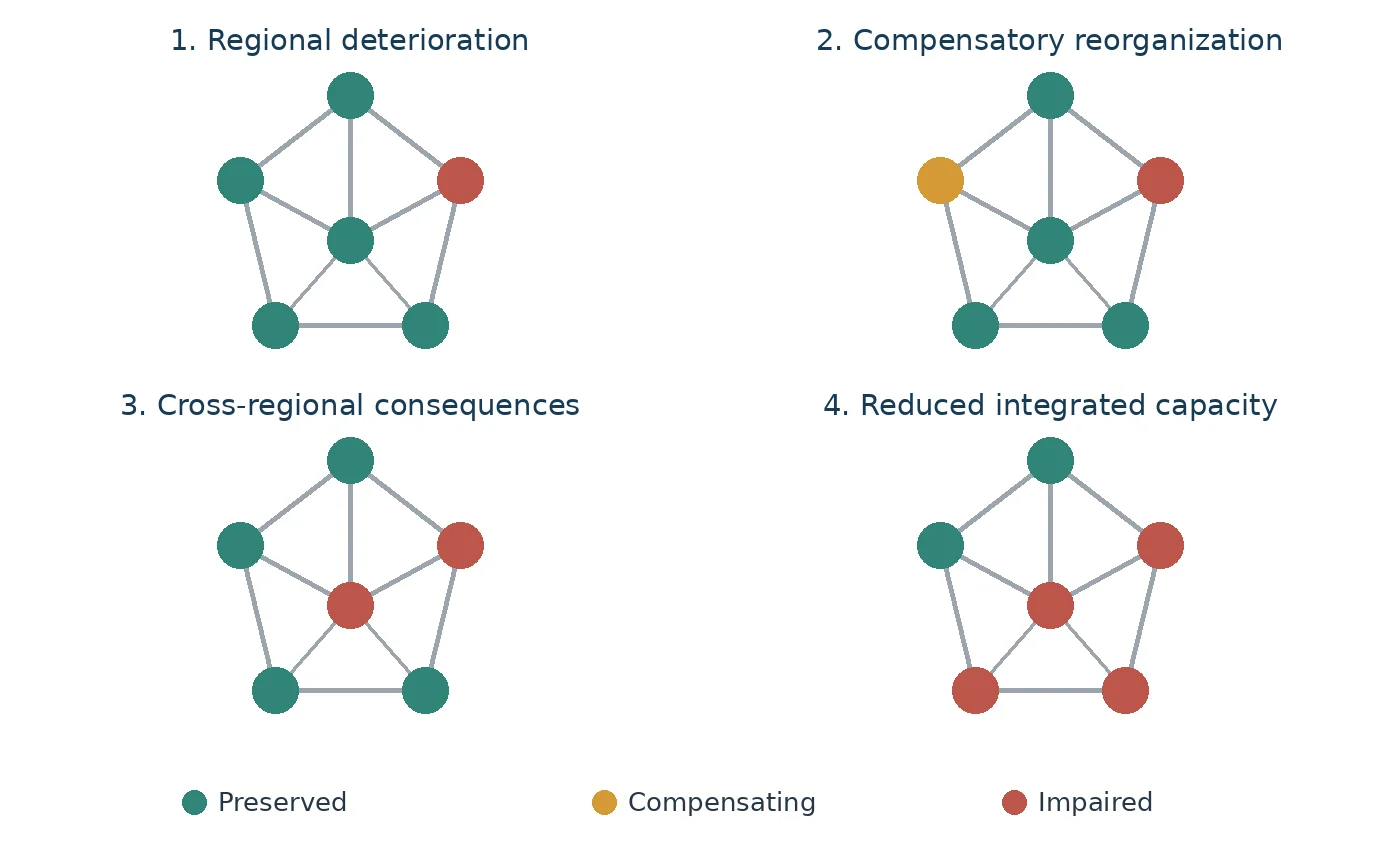
I describe this proposed process through four stages.

Stage 1: Regional Neuromuscular Deterioration

The process begins when particular regions of the body experience a decline in their neuromuscular capacity. This may involve changes in motor neuron excitability, recruitment, firing rates, neuromuscular transmission or the loss of motor units themselves.

The deterioration does not have to occur everywhere simultaneously. Some regions may remain exceptionally well preserved while others gradually lose function.

Stage 2: Compensatory Reorganization

Because movement depends on coordinated activity across multiple muscles, the nervous system may compensate for declining function in one region by altering the contribution of other muscles.

These adjustments may allow the individual to continue performing familiar activities without immediately recognizing the underlying deterioration. Compensation can therefore conceal the extent to which regional neuromuscular capacity has changed.

Stage 3: Cross-Regional Functional Consequences

This is the central and currently unproven proposition of my Network Degradation Model.

I propose that persistent regional deterioration may eventually affect the function of other regions through changes in shared neural control, sensory feedback, muscular coordination, mechanical loading and patterns of movement.

The original deterioration does not necessarily have to spread physically from one motor neuron to another. Its consequences could spread through the functional relationships that connect different parts of the body.

Stage 4: Progressive Loss of Integrated Neuromuscular Capacity

Over several decades, deterioration across multiple regions may progressively reduce the body's ability to compensate. Movements that were once performed effortlessly may become increasingly difficult, even when certain muscles remain relatively strong.

This could help explain why preserving exceptional performance in one physical activity does not necessarily guarantee the preservation of youthful movement throughout the entire body.

The four stages of the proposed model are illustrated in Figure 2.

Four stages of proposed network degradation
Figure 2. The four proposed stages of the Network Degradation Model. Conceptual illustration, not observed longitudinal data.

The model does not suggest that every regional impairment must inevitably result in whole-body deterioration. Rather, it proposes that the location, extent and duration of regional deterioration may influence the long-term functional integrity of the interconnected neuromuscular system.

How Regional Deterioration May Compromise the Entire System

One of the most important questions in my Network Degradation Model is how deterioration in one region of the body could eventually influence the function of another. After all, the motor neurons controlling the muscles of the shoulder are not the same motor neurons controlling the muscles of the lower leg. How, then, could deterioration in the shoulder eventually contribute to declining physical performance in the legs?

To understand this possibility, we must distinguish between the motor units themselves and the network responsible for coordinating their activity. Although individual motor units innervate specific muscle fibers, the movements they produce are integrated into much larger patterns of muscular activity. The nervous system must continually coordinate these patterns according to the physical demands placed on the body.

The Difference Between Losing a Motor Unit and Losing Access to Its Full Potential

A motor neuron does not necessarily have to die for the function of its motor unit to deteriorate. Changes in the signals reaching the motor neuron, its ability to respond to those signals, its firing rate and the transmission of signals to the muscle fibers can all influence the force and speed of muscular contraction.

This distinction is particularly important when investigating aging. A muscle may retain a substantial number of motor units while becoming progressively less capable of producing force rapidly.

Consequently, counting surviving motor units alone may not provide a complete picture of the functional condition of the neuromuscular system. We must also investigate how effectively those motor units can be recruited and controlled during movement.

When Compensation Conceals Deterioration

Imagine an individual whose shoulder muscles gradually lose some of their neuromuscular capacity. The person may still be able to reach for objects, carry groceries and perform everyday activities because the nervous system can modify the contribution of other muscles.

The movement is still accomplished, but the way in which it is accomplished may have changed. Other muscles may assume greater responsibility, joint movements may be modified, and the distribution of muscular activity may differ from what it was when the individual was younger.

Now imagine similar changes occurring in the neck, trunk, hips, hands and feet over several decades. Each regional change may appear relatively insignificant when examined independently. However, their combined effects could progressively alter how the entire body moves.

This is why I believe compensation must not be confused with preservation. The ability to complete a movement does not necessarily mean that the original neuromuscular capacity required to perform that movement has been maintained.

How Quickly Can Neuromuscular Function Deteriorate?

In 2025, Sarto et al. examined what happened to nine healthy young men after just 21 days of bed rest. The participants were between 18 and 29 years old.

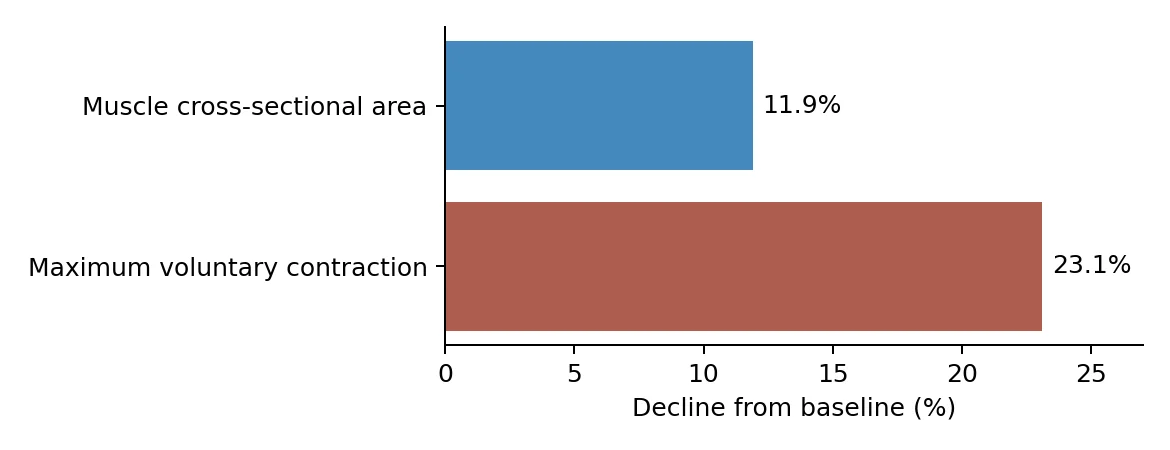
After only three weeks, the cross-sectional area of their quadriceps had decreased by 11.9%, while their maximum voluntary contraction force had decreased by 23.1%. The researchers also observed changes in motor unit firing behavior and neuromuscular transmission. Figure 3 compares the reported changes.

Figure 3 compares the reductions in muscle size and maximum voluntary contraction.

Bar chart showing 11.9% and 23.1% declines
Figure 3. Changes in quadriceps size and maximum voluntary contraction after 21 days of bed rest. Source: Sarto et al. (2025).

What makes these findings particularly interesting is that muscular strength declined considerably more than muscle size. This demonstrates why measuring muscle mass alone cannot tell us everything about the functional condition of the neuromuscular system.

The study does not demonstrate that motor neurons died during those three weeks, nor does it establish that deterioration spread between different regions. Nevertheless, it illustrates how quickly neuromuscular function can change when the physical demands placed on the body are reduced.

Now consider the implications of repeatedly exposing certain regions of the body to demanding physical activity while providing considerably less stimulation to other regions over forty or fifty years.

Could the differences in regional neuromuscular capacity become increasingly important as the individual grows older? This is precisely what my hypothesis proposes we investigate.

When Muscles Remain but Neural Connections Deteriorate

In 2023, Castro et al. investigated age-related changes in spinal motor neurons using evidence from mice, rhesus monkeys and human tissue.

Their animal findings demonstrated that changes in the excitatory connections supplying motor neurons can occur even when substantial numbers of motor neurons remain structurally intact. The human findings were less conclusive, but the research highlights the importance of investigating the connections supplying motor neurons, rather than simply counting the neurons themselves.

This is particularly relevant to the Network Degradation Model because it introduces another dimension of deterioration: the quality of communication within the neuromuscular system.

Preserving the individual components of a network is important, but so is preserving the communication that allows those components to function together.

The Sprinter's Legs May Not Be the Original Problem

Consider again the lifelong sprinter. When sprinting performance eventually declines, researchers may naturally focus their attention on the athlete's legs. They may examine muscle mass, muscle fiber composition, motor unit numbers, firing rates and the ability to produce force rapidly.

But what if part of the explanation lies outside the legs?

What if decades of deterioration in other regions have progressively altered the way the nervous system coordinates the entire body during sprinting?

This is the distinction I want to introduce into the study of neuromuscular aging. A decline in performance observed in one region does not necessarily mean that every contributing cause originated within that region.

The Network Degradation Model proposes that the history of deterioration throughout the body may help explain why even exceptionally well-trained muscles eventually lose some of their functional capacity.

Regional Neuromuscular Deterioration Can Begin Anywhere in the Body

My Network Degradation Model applies to the entire neuromuscular system. Any region of the body may experience deterioration, regardless of the size of its muscles or its role in a particular physical activity. No region is excluded from this hypothesis.

The pelvic floor, neck, shoulders, hands and feet are simply illustrative examples drawn from my original research paper. They are not an exhaustive list of potential vulnerabilities, nor are they presented as more important or more vulnerable than other regions. The central principle is that neuromuscular preservation must encompass the entire body, not just the regions discussed below.

The Pelvic Floor: More Than Bladder Control

The pelvic floor is generally discussed in relation to bladder control and the support of pelvic organs. However, its muscles also work alongside the diaphragm and abdominal muscles in regulating pressure within the abdomen.

In 2020, Swenson et al. investigated differences in pelvic floor support between younger and older women who had never given birth. Their research provides evidence of age-related regional changes that deserve further investigation.

From the perspective of my Network Degradation Model, the important question is whether declining neuromuscular function in this region could eventually influence the coordination of other muscles involved in breathing, trunk stability and movement.

We cannot answer that question simply by measuring the strength of the pelvic floor. We must also investigate how its function interacts with the surrounding muscular and nervous systems.

The Neck: Maintaining Control of the Head

The muscles of the neck perform a function that most people rarely think about until they begin experiencing difficulties. They continuously contribute to maintaining the position and stability of the head while the rest of the body moves.

When running, jumping or rapidly changing direction, the head must remain sufficiently controlled to support vision, balance and spatial orientation. Sensory information from the neck also contributes to the nervous system's understanding of head position.

In 2019, Kocur et al. examined the mechanical properties of superficial neck muscles in 95 adult women. Age accounted for 53% of the variation in one measurement related to the elasticity of the sternocleidomastoid muscle.

This does not mean that the muscle lost 53% of its elasticity or motor units. Nevertheless, the findings demonstrate the importance of examining age-related changes in regions that are not commonly included in assessments of muscular aging.

My hypothesis raises the question of whether progressive deterioration in neck function could eventually influence the quality of movement elsewhere through changes in postural control and sensory feedback.

The Shoulders: Their Contribution to Whole-Body Movement

Watch a sprinter running at maximum speed. Although the legs generate the forces responsible for propulsion, the upper body is also actively involved. The arms swing rapidly, the shoulders contribute to controlling those movements, and the trunk helps coordinate the forces generated by the upper and lower body.

In 2015, Raz et al. investigated age-associated degeneration in different shoulder muscles. Their findings demonstrated that muscles within the same anatomical region can experience different patterns of deterioration.

This is another reason why measuring a single muscle cannot necessarily tell us how well an entire region has been preserved.

From the perspective of my hypothesis, deterioration in the shoulder region could change the demands placed on other muscles during integrated movement. Whether those changes eventually contribute to neuromuscular deterioration elsewhere is a question that requires longitudinal investigation.

The Hands: Small Muscles With Complex Neural Control

The hands contain muscles capable of producing remarkably precise and coordinated movements. Picking up a small object, catching a ball or rapidly adjusting the strength of a grip requires the nervous system to regulate muscular activity according to constantly changing demands.

In 1997, Doherty and Brown investigated age-related differences in the contractile properties of motor units in the muscles at the base of the thumb. More recently, Tanzarella et al. (2020) developed methods for examining motor neuron activity in the muscles controlling the hand.

These studies illustrate why the neuromuscular condition of the hands deserves attention beyond conventional measurements of grip strength.

Being able to grip an object firmly does not necessarily demonstrate that the speed, precision and coordination of the motor units controlling the fingers have been fully preserved.

The Feet: Where the Body Meets the Ground

Every time we stand, walk, run or change direction, the feet provide the physical connection between the body and the ground. Their muscles contribute to stability, force production and the adjustments required when moving across different surfaces.

In 2016, Mickle et al. investigated age-related differences in toe-flexor strength and muscle structure. Their research highlights the importance of examining muscular function in the feet rather than treating the foot simply as a passive structure supporting the body.

If the muscles controlling the feet gradually lose their capacity to respond effectively, other regions may need to adjust how they contribute to movement.

Table 3 summarizes these illustrative examples of regional function.

Example regionContribution to integrated movement
Pelvic floorAbdominal pressure regulation and trunk coordination
NeckHead stability and sensory feedback
ShouldersArm movement and upper-body coordination
HandsPrecision and grip control
FeetGround contact, stability and force production

Table 3. Selected examples only; the hypothesis applies to all body regions.

The immediate mechanical consequences of such adjustments are different from the long-term degenerative consequences proposed in my model. Nevertheless, they provide a starting point for investigating how regional deterioration could influence the wider neuromuscular network.

Why Training Hard Is Not the Same as Training Wide

An individual can train extremely hard for decades without necessarily exposing every region of the neuromuscular system to the physical demands required to preserve its full functional capacity. This is one of the most important distinctions between training for athletic performance and training for longevity.

A competitive athlete generally trains to become exceptionally proficient at a particular activity. A sprinter wants to run faster, a cyclist wants to generate more power on a bicycle, and a weightlifter wants to lift heavier weights. Their training programs are designed around those objectives.

However, when the objective is to preserve youthful neuromuscular function throughout the entire body, the demands of training may need to be considerably broader.

The findings from Power et al., discussed earlier, illustrate why this distinction matters. Lifelong runners demonstrated favorable motor unit preservation in a trained lower-leg muscle, but comparable preservation was not observed in the biceps. Decades of demanding physical activity did not necessarily provide uniform neuromuscular protection throughout the body.

This is why I believe that the intensity of training and the distribution of training must be considered separately.

Physical Activity Does Not Necessarily Preserve Every Physical Ability

Walking, running, cycling and resistance training all provide valuable health benefits. However, each activity places different demands on the nervous system and muscles.

A person can walk several kilometers every day without regularly challenging the ability to generate force explosively. Similarly, an individual can develop considerable muscular strength without regularly challenging the rapid coordination required to change direction, respond to an unexpected movement or recover from a sudden loss of balance.

The ability to produce force, the speed at which that force is produced and the ability to coordinate that force throughout the body are related but distinct characteristics.

Table 4 illustrates how different activities emphasize different neuromuscular demands.

ActivityPrimary demandsOther capacities requiring attention
WalkingEndurance, postural controlExplosive power
SprintingRapid recruitment, explosive forceUpper-body strength and fine motor control
CyclingRepetitive lower-body forceWeight-bearing balance and agility
Heavy resistance trainingHigh force productionReactive movement and coordination
Multidirectional movementAgility, balance and coordinationMaximal strength and endurance

Table 4. Different activities, different neuromuscular demands. Illustrative comparison, not a quantitative ranking or an exhaustive assessment.

From the perspective of my Systemic Motor Unit Integrity Hypothesis, the objective is not merely to remain physically active. It is to preserve the widest possible range of neuromuscular functions across the entire body.

The Importance of Training Fast Motor Units Throughout the Body

As I discussed in my first foundational article, Aging Begins With a Broken Signal: The Silent Loss of Fast Motor Units, I believe that the deterioration of fast motor units deserves considerably greater attention in the study of human aging.

However, preserving fast motor units in the legs alone may not be sufficient if fast motor unit function elsewhere in the body is progressively deteriorating.

The same principle applies to other motor units and the neural mechanisms responsible for controlling them. The objective is to preserve the entire system, not simply one category of motor units or one anatomical region.

This does not mean that every muscle must be trained in exactly the same manner. Different muscles perform different functions and therefore require appropriate forms of stimulation. Nor does it mean that every individual motor unit can be deliberately targeted and verified during training.

Rather, the objective is to expose the entire neuromuscular system to a sufficiently broad range of physical demands to maintain its functional capacity.

Training hard describes how demanding the exercise is. Training wide describes how comprehensively the neuromuscular system is challenged.

For longevity, I propose that both deserve attention.

Preserving Whole-Body Neuromuscular Integrity

If the Network Degradation Model is correct, the way we approach exercise for longevity may need to change. Rather than concentrating primarily on cardiovascular fitness, muscle mass and muscular strength, we must also consider the preservation of neuromuscular function throughout the entire body.

The objective should be to maintain the ability to produce force rapidly, coordinate complex movements, respond to unexpected changes, maintain balance and control the body through a wide range of physical activities. These abilities depend on the condition of individual motor units, the signals reaching them and the ability of the nervous system to coordinate their activity.

Training the Entire Network

My approach to longevity training is based on the principle that no region of the neuromuscular system should be systematically neglected. This includes both the large muscles responsible for powerful movements and the smaller muscles responsible for stability, precision and coordination.

Different forms of exercise challenge different aspects of neuromuscular function. As shown in Table 5, a comprehensive training program should consider a broad range of physical capacities.

Physical capacityExamples of trainingPrimary objective
StrengthResistance trainingMaintain force production
Explosive powerRapid contractions, jumps and sprintsMaintain rapid force production
AgilityMultidirectional movementMaintain rapid changes of direction
Reactive abilityResponding to unpredictable signalsMaintain rapid motor responses
Balance and proprioceptionDynamic stability exercisesMaintain sensory and postural control
MobilityControlled movement through joint rangesMaintain functional movement capacity
Fine motor controlPrecision and dexterity exercisesMaintain coordinated small-muscle activity
EnduranceSustained physical activityMaintain resistance to fatigue

Table 5. Proposed framework for comprehensive neuromuscular training. Illustrative categories, not an exhaustive list or validated training protocol.

The purpose is not to perform every exercise at maximum intensity. It is to provide appropriate stimulation throughout the neuromuscular system while allowing sufficient recovery and adapting the demands to the individual’s physical capacity. A training program should therefore be evaluated not only by what it develops but also by what it consistently leaves unchallenged.

How My Hypothesis Can Be Tested

A scientific hypothesis must be capable of being tested. The Network Degradation Model is no exception. Although existing research supports the interconnected nature of neuromuscular control and the regional benefits of lifelong training, the proposed long-term spread of functional deterioration between regions requires direct investigation.

In my original research paper, I proposed a framework for examining three fundamental questions: whether the distribution of neuromuscular preservation predicts future physical function, whether deterioration in one region precedes deterioration elsewhere, and whether comprehensive training provides additional benefits compared with more specialized training.

Following Neuromuscular Deterioration Over Time

Researchers could follow individuals across different age groups, including lifelong athletes, recreationally active individuals and less active adults. Rather than examining only the quadriceps or another commonly studied muscle, they would assess neuromuscular function across multiple regions.

Measurements could include motor unit estimates, motor unit firing rates, rapid force production, muscle size, sensory function, balance and coordination. Repeated assessments would help determine whether deterioration in one region precedes changes in other regions.

The important distinction is whether these changes are occurring independently because of shared aging processes or whether deterioration in one region is actually contributing to subsequent deterioration elsewhere. My original paper proposes assessments at the beginning of the study and after six, twelve and twenty-four months as a possible starting point. Longer investigations would be necessary to examine changes occurring over decades.

Comparing Specialized Training With Comprehensive Training

Another approach would be to compare two groups undertaking different exercise programs. One group would follow a program emphasizing selected regions, while the other would follow a program designed to provide broader neuromuscular stimulation throughout the body.

Training duration, effort, supervision and progression would need to be comparable. Otherwise, any additional benefits could simply reflect a greater amount of exercise rather than the broader distribution of training.

A twenty-four-week intervention, as proposed in my original paper, could provide an initial investigation into functional changes. It would not, however, establish whether comprehensive training prevents network degradation over an entire lifetime.

What Would Support or Challenge the Model?

Table 6 summarizes the predictions and possible findings.

Proposed predictionFindings supporting the hypothesisFindings challenging the hypothesis
Regional distribution mattersMultiregional measurements predict future movement better than isolated measurementsMultiregional measurements provide no additional predictive value
Cross-regional consequencesEarlier regional deterioration contributes to later decline elsewhere through identifiable mechanismsDeterioration remains localized, or shared causes explain the apparent spread
Comprehensive trainingBroader training produces greater integrated functional benefits under comparable conditionsBroader training provides no additional benefit under adequately tested conditions

Table 6. Proposed scientific tests of the Systemic Motor Unit Integrity Hypothesis and Network Degradation Model, adapted from Ruggia (2026).

The purpose of these investigations would not be to assume that my hypothesis is correct. It would be to determine whether the proposed relationships actually exist, how important they are and under what conditions they occur.

Even if comprehensive training improves whole-body movement, that finding alone would not prove that it prevents cross-regional degradation. These are related but separate scientific questions.

Conclusion: Train the Entire System

For decades, research into muscular aging has provided valuable information about the loss of muscle mass, strength, motor units and physical performance. However, I believe that understanding how these changes interact throughout the entire body may be equally important.

The human neuromuscular system is an interconnected network. Motor units receive shared neural inputs, muscles cooperate to produce movement, and sensory information continuously returns to the nervous system. The preservation of individual components does not necessarily guarantee the preservation of the network as a whole.

The findings from lifelong athletes demonstrate that decades of specialized training can be associated with remarkable regional preservation. My Network Degradation Model asks whether deterioration elsewhere in the body may eventually contribute to the decline of those exceptionally well-preserved regions.

If this hypothesis is correct, the implications for longevity training could be substantial. It would suggest that the breadth of neuromuscular preservation deserves attention alongside training intensity, muscular strength and cardiovascular fitness.

My objective is not simply to preserve strong muscles as I grow older. It is to preserve the capacity of the entire body to move with speed, power, precision, balance and coordination.

The goal should not be to preserve isolated parts of the human body. It should be to preserve the integrity of the entire system.

References

De Luca, C. J., & Erim, Z. (1994). Common drive of motor units in regulation of muscle force. Trends in Neurosciences, 17(7), 299–305. https://doi.org/10.1016/0166-2236(94)90064-7

De Luca, C. J., & Erim, Z. (2002). Common drive in motor units of a synergistic muscle pair. Journal of Neurophysiology, 87(4), 2200–2204. https://doi.org/10.1152/jn.00793.2001

Bräcklein et al. (2022). The control and training of single motor units in isometric tasks are constrained by a common input signal. eLife. https://doi.org/10.7554/eLife.72871

Rossato et al. (2024). The volitional control of individual motor units is constrained within low-dimensional neural manifolds by common inputs. Journal of Neuroscience. https://doi.org/10.1523/JNEUROSCI.0702-24.2024

Rigid control of motor unit firing rates in the human tibialis anterior muscle persists during neurofeedback (2026). https://pubmed.ncbi.nlm.nih.gov/41956737/

Castronovo et al. (2018). Decrease in force steadiness with aging is associated with increased power of the common but not independent input to motor neurons. Journal of Neurophysiology, 120(4), 1616–1624. https://doi.org/10.1152/jn.00093.2018

Ruggia, T. (2026). Rethinking Aging: A Systems-Based Model of Neuromuscular Decline. Preprints (not peer reviewed). https://doi.org/10.20944/preprints202609.1480.v1

Power et al. (2012). Motor unit survival in lifelong runners is muscle dependent. Medicine & Science in Sports & Exercise, 44(7), 1235–1242. https://doi.org/10.1249/MSS.0b013e318249953c

Piasecki et al. (2019). Long-term endurance and power training may facilitate motor unit size expansion to compensate for declining motor unit numbers in older age. Frontiers in Physiology, 10, 449. https://doi.org/10.3389/fphys.2019.00449

Power et al. (2016). Motor unit number and transmission stability in octogenarian world class athletes: Can age-related deficits be outrun? Journal of Applied Physiology, 121(4), 1013–1020. https://doi.org/10.1152/japplphysiol.00149.2016

Sarto et al. (2025). Twenty-one days of bed rest alter motor unit properties and neuromuscular junction transmission in young adults. Journal of Applied Physiology, 138(6), 1411–1424. https://doi.org/10.1152/japplphysiol.00178.2025

Castro, R. W., Lopes, M. C., Settlage, R. E., & Valdez, G. (2023). Aging alters mechanisms underlying voluntary movements in spinal motor neurons of mice, primates, and humans. JCI Insight, 8(9), e168448. https://doi.org/10.1172/jci.insight.168448

Swenson et al. (2020). Aging effects on pelvic floor support: A pilot study comparing young versus older nulliparous women. International Urogynecology Journal, 31, 535–543. https://doi.org/10.1007/s00192-019-04063-z

Kocur et al. (2019). Relationship between age, BMI, head posture and superficial neck muscle stiffness and elasticity in adult women. Scientific Reports, 9, 8515. https://doi.org/10.1038/s41598-019-44837-5

Raz et al. (2015). Patterns of age-associated degeneration differ in shoulder muscles. Frontiers in Aging Neuroscience, 7, 236. https://doi.org/10.3389/fnagi.2015.00236

Doherty, T. J., & Brown, W. F. (1997). Age-related changes in the twitch contractile properties of human thenar motor units. Journal of Applied Physiology, 82, 93–101. https://doi.org/10.1152/jappl.1997.82.1.93

Tanzarella et al. (2020). Non-invasive analysis of motor neurons controlling the intrinsic and extrinsic muscles of the hand. Journal of Neural Engineering, 17, 046033. https://doi.org/10.1088/1741-2552/aba6db

Mickle et al. (2016). Effects of age on strength and morphology of toe flexor muscles. Journal of Orthopaedic & Sports Physical Therapy, 46, 1065–1070. https://doi.org/10.2519/jospt.2016.6597

Aging Begins With a Broken Signal: The Silent Loss of Fast Motor Units

Tetz’s Law of Longevity: What Happens When Motor Units Enter the Equation?

Can Yamanaka Factors Make Us Younger Without Restoring Our Physical Abilities?