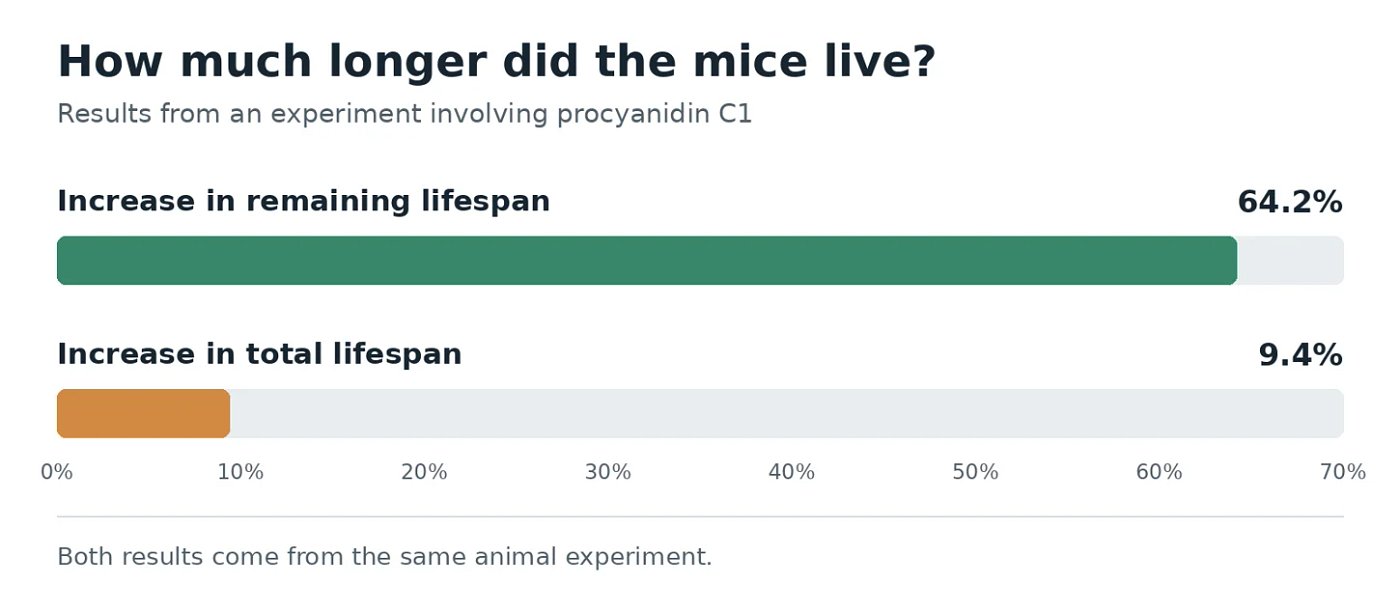
Figure 2. The difference between the increase in remaining lifespan and total lifespan in older mice given procyanidin C1. Results from Xu et al. (2021), reported in the scientific review.
A 9.4% increase in total lifespan is still an interesting result, but it is considerably different from a 64.2% increase.
The researchers also discuss naringenin, found in oranges, grapefruits and other citrus fruits. Experiments suggest that it may help protect stem cells, support muscle repair and encourage the production of new nerve cells in certain parts of the brain.
10. Helping Our Cells Communicate With Each Other
The cells inside our bodies are constantly sending messages to one another. These messages help control everything from blood sugar levels to the way our organs work. As we age, some of these messages become less effective.
The review discusses baicalin, found in Chinese skullcap root, and berberine, found in plants such as barberry and goldenseal.
Berberine is particularly interesting because it has already been examined in human studies. Some of these studies have found improvements in blood sugar control and cholesterol levels in people with metabolic health problems.
These are useful findings, although improving blood sugar control does not necessarily mean that someone will live longer.
11. Reducing Long-Term Inflammation
Inflammation is part of the body's natural defense system. If you cut your finger or develop an infection, inflammation helps your body respond and begin repairing the damage.
The problem arises when inflammation continues for long periods, even when there is no obvious injury or infection. This becomes more common as we grow older and can contribute to heart disease, diabetes and several other health problems.
Ginger contains a substance called zingerone, which has been shown to reduce inflammation in animal experiments. Black rice and black sorghum contain another interesting substance called luteolinidin.
Luteolinidin may help slow down the breakdown of NAD+, a substance mentioned earlier that our cells need to produce energy and perform many important jobs. Laboratory experiments also suggest that luteolinidin may help reduce inflammation in several different ways.
12. Feeding the Beneficial Bacteria Inside Our Intestines
Not all bacteria are harmful. In fact, many of the trillions of bacteria living inside our intestines help us digest food, support our immune system and produce substances that keep our intestines healthy.
As we grow older, the balance between these bacteria can change.
Two types of fiber discussed in the review are inulin and fructooligosaccharides. Although their names may sound complicated, their purpose is relatively simple: they provide food for some of the beneficial bacteria living inside our intestines.
Inulin can be found in chicory, Jerusalem artichokes and leeks, while fructooligosaccharides can be found in onions, garlic, asparagus and bananas. When beneficial bacteria feed on these substances, they produce other substances that help keep the intestinal lining healthy.
Human studies discussed in the review have found that these types of fiber can improve the balance of intestinal bacteria and certain measurements associated with inflammation and immune health.
13. Preventing Our Tissues From Becoming Stiffer
One of the most noticeable changes that occurs as we grow older is the gradual loss of flexibility in our tissues. Our skin becomes less elastic, our blood vessels can become stiffer, and the tissues that help support our joints can also change.
One reason for this is that sugar molecules can attach themselves to proteins such as collagen and elastin. Over time, this can make tissues stiffer and less flexible. Scientists call this process glycation.
The researchers highlight rosmarinic acid, a substance found in rosemary, basil, sage and lemon balm. Laboratory experiments suggest that rosmarinic acid may help reduce the formation of some of the harmful substances produced during this process. It has also helped worms live longer in laboratory experiments.
Whether regularly adding rosemary to our meals can significantly reduce the stiffening of our tissues as we grow older has not yet been established.
14. Protecting the Body's Natural Barriers
Our skin protects us from the outside world, but we also have protective barriers inside our bodies.
For example, the lining of our intestines helps control what passes from the food we eat into our bodies. We also have a protective barrier that helps prevent certain harmful substances in our bloodstream from reaching our brain.
As we age, some of these barriers can become weaker, potentially allowing unwanted substances to enter places where they can cause damage and inflammation.
The researchers discuss silymarin, found in milk thistle, and oleuropein, found in olives and olive oil. Laboratory and animal experiments suggest that these substances may help strengthen some of these protective barriers and reduce inflammation.
15. Keeping Our Internal Body Clock Working Properly
Our bodies have their own internal clock. It helps determine when we feel sleepy, when we wake up, when certain hormones are released and how our bodies use energy at different times of the day.
This clock can become less reliable as we grow older, affecting our sleep and other important functions.
The researchers highlight nobiletin, found mainly in the peels of citrus fruits, and melatonin, a hormone naturally produced by our bodies that is also found in foods such as tart cherries.
Experiments suggest that nobiletin may help strengthen the body's daily rhythms. Melatonin, meanwhile, helps regulate when we feel sleepy. However, more research is needed to determine whether the amounts of these substances found in foods can meaningfully improve age-related changes in our internal body clock.
Our bodies need iron to survive. Without enough iron, we would have difficulty transporting oxygen from our lungs to the rest of our bodies.
However, too much iron in certain tissues can also be harmful.
When iron is not properly controlled or stored, it can contribute to chemical reactions that damage our cells. Changes in the way our bodies handle iron and other metals as we grow older may contribute to inflammation and damage to the brain and other organs.
The researchers highlight carnosic acid, found in rosemary and sage, and curcumin, found in turmeric. Laboratory experiments suggest that both substances may help protect against some of the damage caused by excess metals.
Interestingly, one human experiment discussed in the review found that rosemary extract reduced the amount of iron absorbed from a meal. This illustrates why we should not automatically assume that every effect of a natural substance is beneficial. Someone who already has low iron levels may not benefit from absorbing even less iron.
Which Everyday Foods Contain These Substances?
One of the most useful parts of this scientific review is that it identifies where many of these substances can be found. Although some are obtained from medicinal plants, many are available in ordinary supermarkets.
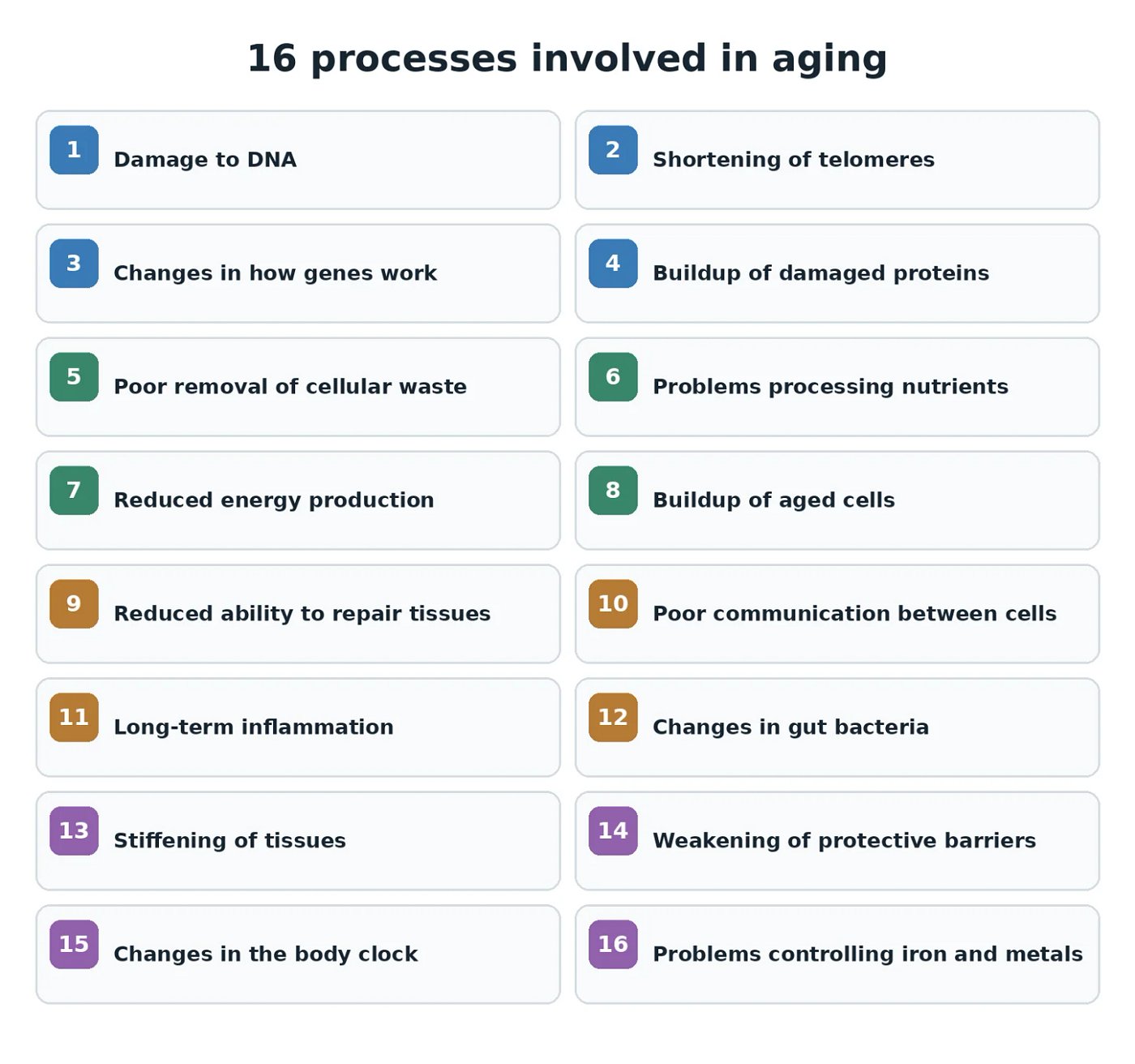
The following table brings together the 16 processes examined in the review, the substances that may help protect against them and their natural sources.
| DNA damage |
Ergothioneine, quercetin |
Mushrooms, onions, apples, capers |
| Shortening of telomeres |
Astragaloside IV, fisetin |
Astragalus root, strawberries, apples, grapes |
| Changes in how genes work |
EGCG, sulforaphane, indole-3-carbinol |
Green tea, broccoli, cabbage, cauliflower |
| Buildup of damaged proteins |
6-shogaol, glabridin |
Ginger, licorice root |
| Poor removal of cellular waste |
Spermidine, resveratrol |
Wheat germ, mushrooms, soybeans, grapes, peanuts |
| Problems processing nutrients |
Isofalcarintriol, apigenin |
Carrots, ginseng, parsley, celery, chamomile |
| Reduced energy production |
Urolithin A, trigonelline |
Pomegranates, walnuts, berries, coffee, fenugreek |
| Buildup of aged cells |
Myricetin, piperlongumine |
Blueberries, cranberries, grapes, long pepper |
| Reduced ability to repair tissues |
Procyanidin C1, naringenin |
Grape seeds, oranges, grapefruits |
| Poor communication between cells |
Baicalin, berberine |
Chinese skullcap root, barberries, goldenseal |
| Long-term inflammation |
Zingerone, luteolinidin |
Ginger, black rice, black sorghum |
| Changes in gut bacteria |
Inulin, fructooligosaccharides |
Chicory, leeks, onions, garlic, asparagus, bananas |
| Stiffening of tissues |
Rosmarinic acid |
Rosemary, basil, sage, lemon balm |
| Weakening of protective barriers |
Silymarin, oleuropein |
Milk thistle, olives, olive oil |
| Changes in the body clock |
Nobiletin, melatonin |
Citrus peels, tart cherries |
| Problems controlling iron and metals |
Carnosic acid, curcumin |
Rosemary, sage, turmeric |
Table 1. Natural substances that may influence the 16 processes involved in aging. Adapted from Moskalev and Veselova (2026). Urolithin A is produced by intestinal bacteria after consuming certain substances found in foods.
Notice how some foods appear more than once in this table. Rosemary, for example, contains substances that may help protect against both tissue stiffening and damage caused by excess metals. Ginger contains substances that may help our bodies deal with damaged proteins and inflammation.
This is one reason why scientists are interested in the possible benefits of eating a wide variety of plant foods rather than concentrating on a single substance.
Which Substances Do the Researchers Consider the Most Promising?
Of all the substances examined in the review, the researchers consider spermidine and EGCG particularly promising. Both have been studied in several types of organisms, and scientists have gathered considerable information about how they work inside cells.
Quercetin, fisetin, urolithin A and procyanidin C1 were also identified as substances that deserve further investigation.
The researchers suggest that combining different substances might eventually prove more beneficial than taking any one of them alone. One substance might help remove damaged material from cells, another might help reduce inflammation, while another might help cells produce energy more efficiently.
However, the researchers also acknowledge that more human studies are needed. Scientists still need to establish how much of each substance is required, how much the human body actually absorbs and whether combining concentrated amounts of these substances is safe over long periods.
My Perspective: Are We Overlooking the Value of Everyday Foods?
What I find particularly interesting about this scientific review is that many of the substances being investigated for their potential to promote longevity can already be found in ordinary foods.
Take rosemary, parsley, mushrooms and blueberries, for example. These are foods and herbs that can easily be included in our daily diets. Yet each contains substances that scientists are investigating for their ability to protect against some of the changes that occur as we grow older.
However, there is a considerable difference between what happens in a laboratory and what happens inside the human body. Scientists can expose cells directly to a concentrated substance in a laboratory, but when we eat that same substance, it must first pass through our digestive system. Some of it may never be absorbed, some may be broken down before reaching our tissues, and some may be removed from our bodies relatively quickly.
This is something that needs to be considered whenever we read about a substance that has extended lifespan in an animal experiment.
We also need to look beyond what happens inside individual cells. Suppose someone consumes every substance discussed in this review but spends most of their life sitting down. Will these substances preserve that person's ability to run, jump, change direction quickly or maintain good balance as they grow older?
There is currently no evidence that any of these substances can replace the physical stimulation that our bodies receive through exercise.
Nutrition is extremely important, but so is maintaining the physical abilities that allow us to remain independent throughout our lives. I would like to see more long-term human studies that examine these natural substances alongside regular exercise and measure not only what happens inside our cells but also how well our bodies continue to function as we grow older.
Living longer is one thing. Remaining physically capable and healthy throughout those additional years is another.
Conclusion
This scientific review provides an interesting look at how ordinary foods may help protect against some of the changes that occur inside our bodies as we age.
Many of the substances discussed have produced encouraging results in laboratory and animal experiments, and some have already demonstrated health benefits in humans. Nevertheless, there is still a considerable amount of research to be done before scientists can determine whether any of these individual substances can extend human lifespan.
In the meantime, mushrooms, vegetables, fruits, nuts, herbs and spices can provide a wide variety of these natural substances without requiring us to purchase dozens of different supplements.
Reference
Moskalev, A., & Veselova, O. (2026). Potential dietary geroprotectors and their impact on key mechanisms of aging. Biogerontology, 27, Article 8.
DOI: 10.1007/s10522-025-10355-3